--------------------------------------------------------------------------------
139 - Sanctification, Liberations, and Black Worship
Sanctification, Liberations, and Black Worship
By James H. Cone
"Black American spirituality was born in the context of the struggle for justice…. When the meaning of sanctification is formed in the social context of an oppressed community in struggle for liberation, it is difficult to separate the experience of holiness from the spiritual empowerment to change the existing societal arrangements."
MY concern in this article is to examine the spiritual foundation of black worship as reflected in its components of preaching, singing, shouting, conversion, prayer, and testimony. Hopefully I will be able to clarify the connection between the experience of holiness in worship and the struggle for political justice in the larger society.
I
Black worship is essentially a spiritual experience of the truth of black life. The experience is spiritual because the people encounter the presence of the Holy Spirit in their midst. Black worship is truthful because the Spirit's presence authenticates their experience of freedom by empowering them with courage and strength to bear witness in their present existence, what they know is coming in God's own eschatological future.
Have I got a witness?
Certainly Lord!
Have I got a witness?
Certainly Lord!
Certainly, certainly, certainly Lord.
This call and response is an essential element of the black worship style. Black worship is a community happening, wherein the people experience the truth of their lives as lived together in the struggle of
--------------------------------------------------------------------------------
James H. Cone is Charles A. Briggs Professor of Systematic Theology, Union Theological Seminary, New York. He has been prominent in the development of a "black theology" movement and is the author of such well-known books as Black Theology and Black Power (1969), A Black Theology of Liberation (1970), The Spirituals and the Blues (1972), and God of theOppressed (1975). The substance of this article was delivered as an address by Dr. Cone at the Sixth Oxford Institute on Methodist Theological Studies, Lincoln College, Oxford, England, July, 1977.
--------------------------------------------------------------------------------
140 - Sanctification, Liberations, and Black Worship
freedom and held together by God's Spirit. There is no understanding of black worship apart from the presence of the Spirit who descends upon the gathered community, lighting a spiritual fire in their hearts. The divine Spirit is not a metaphysical entity but rather the power of Jesus, who breaks into the lives of the people giving them a new song to sing as confirmation of God's presence with them in historical struggle. It is the presence of the divine Spirit who accounts for the intensity in which black people engage in worship. There is no understanding of black worship apart from the rhythm of the song and sermon, the passion of prayer and testimony, the ecstasy of the shout and conversion as the people project their humanity in the togetherness of the Spirit.
The black church congregation is an eschatological community that lives as if the end of time is already at hand. The difference between the earliest Christian community as an eschatological congregation and the black church community is this: The post-Easter community expected a complete cosmic transformation in Jesus' immediate return because the end of time was at hand; the eschatological significance of the black community is found in the people believing that the Spirit of Jesus is coming to visit them in the worship service each time two or three are gathered in his name, and to bestow upon them a new vision of their future humanity. This eschatological revolution is not so much a cosmic change as it is a change in the people's identity, wherein they are no longer named by the world but named by the Spirit of Jesus. Roberta Flack expressed the significance of this eschatological change in the people's identity in her singing, "I told Jesus it would be all right if he changed my name. He told me that the world will turn away from you, child, if I changed your name." This change in identity not only affects one's relationship with the world but also with one's immediate family. "He told me that your father and mother won't know you, child, if I changed your name." Because the reality of the Spirit's liberating and sanctifying presence is so overwhelming on the believer's identity, the believer can still say with assurance: "I told Jesus it would be all right if he changed my name."1
The Holy Spirit's presence with the people is a liberating experience. Black people who have been humiliated and oppressed by the structures of white society six days of the week, gather together each Sunday morning in order to experience another definition of their humanity. The transition from Saturday to Sunday is not just a chronological change from the seventh to the first day of the week. It is rather a rupture in time, a Kairos-event which produces a radical transformation in the people's identity. The janitor becomes the chairperson of the Deacon Board; the maid becomes the president of Stewardess Board Number I. Everybody becomes Mr. and Mrs., or Brother and Sister. The last becomes first, making a radical change in New York, 1969.
--------------------------------------------------------------------------------
1 See Roberta Flack's record album, "First Take," Atlantic Recording Corp.,
--------------------------------------------------------------------------------
141 - Sanctification, Liberations, and Black Worship
the perception of self and one's calling in the society. Every person becomes somebody, and one can see the people's recognition of their new found identity by the way they walk and talk and "carry themselves." They walk with a rhythm of an assurance that they know where they are going, and they talk as if they know the truth about which they speak. It is this experience of being radically transformed by the power of the Spirit that defines the primary style of black worship. This transformation is found not only in the titles of Deacons, Stewardesses, Trustees, and Ushers, but also in the excitement of the entire congregation at worship. To be at the end of time where one has been given a new name requires a passionate response with the felt power of the Spirit in one's heart.
In the act of worship itself, the experience of liberation becomes a constituent of the community's being. In this context, liberation is not exclusively a political event but also an eschatological happening. It is the power of God's Spirit invading the lives of the people, "buildin' them up where they are torn down and proppin' them up on every leanin' side." When a song is sung right and the sermon is delivered in response to the Spirit, the people experience the eschatological presence of God in their midst. Liberation is no longer a future event, but a present happening in the worship itself. That is why it is hard to sit still in a black worship service. For the people claim that "if you don't put anything into the service, you sure won't get anything out of it." Black worship demands involvement. Sometimes a sister does not plan to participate too passionately, but before she knows what is happening "a little fire starts to burning and a little prayer-wheel starts to turning in her heart." In response to the Spirit and its liberating presence, she begins to move to the Spirit's power. How and when she moves depends upon the way the Spirit touches her soul and engages her in the dynamics of the community at worship. She may acknowledge the Spirit's presence with a song.
Everytime I feel the spirit
Moving in my heart I will pray.
Every time I feel the spirit
Moving in my heart I will pray.
Upon the mountain my Lord spoke.
Out of His mouth came fire and smoke.
In the valley on my knees,
Asked my Lord, Have mercy, please.
Everytime I feel the spirit
Moving in my heart I will pray….
Song is only one possible response to the Spirit's presence. God's Spirit also may cause a person to preach, pray, or testify. "I believe I will testify for what the Lord has done for me" is an often-heard response in the black church. But more often the presence of the Spirit elicits what W. E. B. DuBois called the "Frenzy" 2 and what the people
--------------------------------------------------------------------------------
2 See his The Souls of Black Folk (New York: Fawcett, 1968), pp. 141f.
--------------------------------------------------------------------------------
142 - Sanctification, Liberations, and Black Worship
call the "shout," which refers not to sound but to bodily movement. "When the Lord gets ready," the people claim, "you've got to move," that is, to "stand up and let the world know that you are not ashamed to be known as a child of God."
There is no authentic black worship service apart from the presence of the Spirit, God's power to be with and for the people. It is not unusual for the people to express their solidarity with John on the Island of Patmos and to say with him: "I was in the Spirit on the Lord's day" (Rev. 1:10). Like John, black people believe that to be in the Spirit is to experience the power of another presence in their midst. The Spirit is God's guarantee that the little ones are never, no not ever, left alone in their struggle for freedom. The Spirit is God's way of being with the people, enabling them to shout for joy when the people have no empirical evidence in their lives to warrant happiness. The Spirit sometimes makes you run and clap your hands; at other times, you want just to sit still and perhaps pat your feet, wave your hands, and hum the melody of a song: "Ain't no harm to praise the Lord."
It is difficult for an outsider to understand what is going on in a black worship service. To know what is happening in this eschatological event, one cannot approach this experience as a detached observer in the role of a sociologist of religion or as a psychologist, looking for an explanation not found in the life-experiences of the people. One must come as a participant in black reality, willing to be transformed by one's encounter with the Spirit. Those who are willing to receive the Spirit, being open to what God has in store, will probably understand what the people mean when they sing:
Glory, glory, hallelujah
Since I laid my burdens down.
Glory, glory, hallelujah,
Since I laid my burdens down.
I'm going home to live with Jesus,
Since I laid my burdens down.
I'm going home to live with Jesus,
Since I laid my burdens down.
It is the people's response to the presence of the Spirit that creates the unique style of black worship. The style of black worship is a constituent of its content, and both elements point to the theme of liberation. Unlike whites who often drive a wedge between content and style in worship (as in their secular-sacred distinction), blacks believe that a sermon's content is inseparable from the way in which it is proclaimed. Blacks are deeply concerned about how things are said in prayer and testimony and their effect upon those who hear it. The way I say "I love the Lord, he heard my cry" cannot be separated from my intended meaning as derived from my existential and historical setting. For example, if I am one who has just escaped from slavery and my affirmation is motivated by that event, I will express my faith-claim with the passion and ecstasy of one who was once lost and now found. There will be no detachment in my proclamation of freedom. Only
--------------------------------------------------------------------------------
143 - Sanctification, Liberations, and Black Worship
those who do not know bondage existentially can speak of liberation "objectively." Only those who have not been in the "valley of death" can sing the songs of Zion as if they are uninvolved. Black worship is derived from the meeting with the Lord in the struggle to be free. If one has not met the Spirit of God in the struggle for freedom, there can be no joy and no reason to sing with ecstatic passion "I am so glad that trouble don't last always."
II
There are six principal components of black worship: preaching, singing, shouting, conversion, prayer, and testimony.
Expressing his admiration for the black preacher, W. E. B. DuBois called him, among other things, "a leader, a politician, an orator, a 'boss,' an intriguer, an idealist."3 But DuBois did not include "prophet" in his list, certainly the black preacher's most important office. The black preacher is primarily a prophet who speaks God's truth to the people. The sermon therefore is a prophetic oration wherein the preacher "tells it like it is" according to the divine Spirit who speaks through the preacher.
In the black church, the sermon is not intended to be an intellectual discourse on things divine or human. That would make the preached Word a human word and thus dependent upon the intellectual capacity of the preacher. In order to separate the preached Word from ordinary human discourse and thereby connect it with prophecy, the black church emphasizes the role of the Spirit in preaching. No one is an authentic preacher in the black church tradition until called by the Spirit. No person, according to this tradition, should decide to enter the ministry on his or her own volition. Preaching is not a human choice; it is a divine choice. Just as God called Amos from Tekoa, Jeremiah while he was only a youth, Isaiah in the temple, and Paul on the Damascus road, so also God speaks directly to those set aside for the ministry. It is expected that the preacher will give an account of this calling, about how and when the Lord touched a soul and set a person aside for the proclamation of divine truth. Some preachers testify that it was late one Wednesday evening or early one Thursday morning. There is no rigidity about the time or even how the call came. But what is important is the authenticity of the call so that the people know that they are encountering God's Word through the sermon's oration, and not simply the personal interest of a given preacher.
In the black tradition, preaching as prophecy is essentially telling God's story. "Telling the story" is the essence of black preaching. It means proclaiming with appropriate rhythm and passion the connection between the Bible and the history of black people. What has the Scripture to do with our life in white society and the struggle to be somebody in it? To answer that question depends upon the capacity of the preacher to tell God's story so that the people will experience its
--------------------------------------------------------------------------------
3 Ibid., p. 141.
--------------------------------------------------------------------------------
144 - Sanctification, Liberations, and Black Worship
liberating presence in their midst. That is why the people always ask of every preacher: "Can the Reverend tell the story?" To tell the story is to act out with the rhythm of one's voice and the movement of the body, the truth about which one speaks. We can say of the black preacher what B.D. Napier says about the Old Testament prophet: "The symbolic acts of the prophets are simply graphic, pictorial extensions of the Word, possessing both for the prophet and for his observers-bearers a quality of realism probably unfathomable psychologically to the western mind."4
If the people do not say "Amen" or some other passionate response, this usually means that the Spirit has chosen not to speak through the preacher at that time. The absence of the Spirit could mean that the preacher was dependent too much on his own capacity to speak or that the congregation was too involved in its own personal quarrels. Whatever the case, the absence of a "hallelujah" and "praise the Lord" when the preacher speaks God's Word is uncharacteristic of a black worship service. For these responses let the preacher know that be is on the right track, and that what he says rings true to the Spirit's presence in their midst. An "Amen" involves the people in the proclamation and commits them to the divine truth which they hear proclaimed. It means that the people recognize that what is being said is not just Reverend so-and-so's idea but God's claim upon the people.
III
Next to preaching, song is the most important ingredient in black worship. Most black people believe that the Spirit does not descend without a song. Song opens the hearts of the people for the coming of God's Spirit. That is why most church services are opened with a song and why most preachers would not attempt to preach without having the congregation sing a "special" song in order to prepare the people for God's Word. Song not only prepares the people for the Spirit, it also intensifies the power of the Spirit's presence with the people. Through song a certain mood is created in the congregation, and the people can experience the quality of the Spirit's presence. One cannot force the Spirit to come through manipulation. The Spirit always remains free of human choice. By singing a song, the people know whether they have the proper disposition for the coming of the Spirit.
In many black congregations, there are special songs which are led by particular people, and no one would dare sing another person's song. That would be a sure way of "killing the Spirit." I grew up in Macedonia AME Church in Bearden, Arkansas, and I can remember several people's songs in that congregation. My mother's song was:
This little light of mine,
I'm goin' to let it shine;
This little light of mine,
I'm goin' to let it shine,
Let it shine, let it shine.
--------------------------------------------------------------------------------
4 "Prophet, Prophetism" in The Interpreter's Dictionary of the Bible, Vol. 3 (Nashville: Abingdon Press, 1962), p. 912.
--------------------------------------------------------------------------------
145 - Sanctification, Liberations, and Black Worship
Sister Ora Wallace, unquestionably the best singer at Macedonia, would always sing:
I'm workin'on the buildin'
It's a true foundation,
I'm holdin' up the blood-stained banner for my Lord.
Just as soon as I get through,
Through working on the buildin'
I'm goin' up to heaven to get my reward.
Of all the favorite songs of Macedonia, I will never forget Sister Drew Chavis' song, because she sang it with such intensity and passion that it never failed to bring tears in the eyes of most people assembled:
Precious Lord, take my hand,
Lead me on, let me stand,
I am tired, I am weak, I am worn.
Through the storm, through the night
Lead me on to the light,
Take my hand, precious Lord,
Lead me home.
By the time she reached the second stanza and began to sing "when my life is almost gone, Hear my cry, hear my call, Hold my hand lest I fall," the entire congregation was wet with tears, because they knew that they had to cross the River Jordan. Thus ' they waited patiently for the familiar lines in the third verse: "At the river I stand, Guide my feet, hold my hand. Take my hand, precious Lord, Lead me home."
It is possible to "have church," as the people would say, without outstanding preaching, but not without good singing. Good singing is indispensable for black worship, for it can fill the vacuum of a poor sermon. There are those who would say that a "good sermon ain't nothing but a song." In recent years, taking their cue from their white counterparts, many black churches have replaced congregational singing with choir singing, thereby limiting the people's involvement in worship. While choirs have their place in certain restricted contexts, the true black service involves the entire congregation in song.
IV
Good singing naturally leads to shouting which is often evidence that one has been converted. As elements of black worship shouting and conversion belong together, because they are different moments in a single experience. To shout is to "get happy." It happens in the moment of conversion and in each renewal of that experience in the worshipping community. Shouting is one's response to the movement of the Spirit encountered in the worship service. For white intellectuals, including theologians, black folks shouting is perhaps the most bizarre event in their worship services. White intellectuals often identify shouting in the black church with similar events in white churches, trying to give a common sociological and psychological reason for the phenomenon. Such an approach is not only grossly misleading from my theological perspective but also from the premises and procedures that white scholars claim guided their examination. How is it possible to
--------------------------------------------------------------------------------
146 - Sanctification, Liberations, and Black Worship
speak of a common sociological and psychological reason for religious ecstasy among blacks and whites when they have radically different social and political environments, thereby creating different psychological and religious orientations? It is absurd on sociological, psychological, and theological grounds to contend that the Ku Klux Klansman and the black person who escaped him are shouting for the same or similar reasons in their respective church services. Because whites and blacks have different historical and theological contexts out of which their worship services arise, they do not shout for the same reasons.
The authentic dimension of black people's shouting is found in the joy the people experience when God's Spirit visits their worship and stamps a new identity upon their personhood in contrast to their oppressed status in white society. This and this alone is what the shouting is about. This experience is so radical that the only way to speak of it is in terms of dying and rising again. It is a conversion experience. In one sense conversion is a once and for all event and is associated with baptism. In another sense, one is continually converted anew to the power of the Spirit and this is usually connected with shouting. "God struck me dead," recalled an ex-slave, connecting his conversion with the experience of dying.5 But on the other side of death is the resurrection, a new life and determination to live for God. Since one cannot stay on the "mountain top" but must return to the "valley of life," there is always the need to return to the place where one once stood, in order to experience anew the power of God's Spirit. This is what happens on Sunday morning at the "altar call." The preacher invites the entire congregation to renew their determination to stay on the "Lord's journey" and "to work in his vineyard."
The renewal of one's determination is often done with prayer and testimony. To testify is to stand before the congregation and bear witness to one's determination to keep on the "gospel shoes." "I don't know about you," a sister might say, "but I intend to make it to the end of my journey. I started on this journey twenty-five years ago, and I can't turn back now. I know the way is difficult and the road is rocky. I've been in the valley, and I have a few more mountains to climb. But I want you to know this morning that I ain't going to let a little trouble get in the way of me seeing my Jesus."
V
Prayer is the final element of black worship to be considered. Like the song, prayer creates the mood for the reception of God's Spirit, and is the occasion when the people specifically request Jesus to come and be with them. The people actually believe that they can call Jesus upon the "telephone of prayer" and tell him all about their troubles. They also contend that his line is never busy, and he is always ready to
--------------------------------------------------------------------------------
5 See the book by that title edited by Clifton Johnson (Philadelphia: Pilgrim Press, 1969).
--------------------------------------------------------------------------------
147 - Sanctification, Liberations, and Black Worship
receive their call. It is not uncommon to hear the people say: "Jesus is on the main line, call him up and tell him what you want." Prayer is a way of communicating with the divine. That is why a black preacher seldom enters the pulpit without praying.
Harold Carter, a Baptist preacher in Baltimore, accurately describes the essence of black power: It is "more than a word spoken; it [is] an event to be experienced. The spirit of what happen[s] [is] as important as the words [being] spoken."6 Black prayer should be heard and not read because the rhythm of the language is as crucial to its meaning as is the content of the petition. To know what black prayer means, one needs to hear the deacon say:
Almighty and all wise God our heavenly Father, 'tis once more and again that a few of your beloved children are gathered together to call upon your holy name. We bow at your footstool, Master, to thank you for our spared lives. We thank you that we were able to get up this morning clothed in our right mind. For Master, since we met here, many have been snatched out of the land of the living and hurled into eternity. But through your goodness and mercy we have been spared to assemble ourselves here once more to call upon a Captain who has never lost a battle.7
At this point in the prayer, the deacon is ready to go through his lists of requests which normally relate to the bestowal of strength on the people to survive in a sin-sick world. When he concludes his requests, he moves toward his conclusion:
And now, Oh, Lord, when this your humble servant is done down here in this low land of sorrow; done sitting down and getting up; done being called everything but a child of God; Oh, when I am done, done, done, and this old world can afford me a home no longer, right soon in the morning, Lord, right soon in the morning, meet me at the River of Jordan, bid the waters to be still, tuck my little soul away in your chariot, and bear it away over yonder in the third heaven where every day will be a Sunday and my sorrows of this old world will have an end, is my prayer for Christ, my Redeemer's sake, and Amen and thank God.8
If one fact is clear from our examination of black worship, it is primarily a happening in the lives of the people. Both the content of what is said and the manner in which things are expressed emphasize that black worship is an eschatological event, the time when the people experience a liberation in their present existence for what they believe will be fully realized in God's coming future.
VI
On the basis of our interpretation of black worship as an eschatological event, it is not difficult to understand why Richard Allen, the founder of the African Methodist Episcopal Church, was so "confident
--------------------------------------------------------------------------------
6 See his The Prayer Tradition of Black People (Valley Forge: Judson Press, 1976), p. 21.
7 A prayer offered in South Nashville, Tennessee, in the summer of 1928, reproduced in Langston Hughes and Arna Bontemps' Book of Negro Folklore (New York: Dodd, Mead, and Co., 1958), p. 256.
8 Ibid., pp. 256-257.
--------------------------------------------------------------------------------
148 - Sanctification, Liberations, and Black Worship
that there was no religious sect or denomination [that] would suit the capacity of the colored people as well as the Methodist.9 The process of salvation in terms of repentance, forgiveness, and new birth, so important for John Wesley, is also dominant in the black religious tradition, generally, and in black Methodism, in particular.10 Of course, these are also characteristic of other denominational traditions, notably among the Baptists and the Pentecostals, but we are, for the moment, especially interested in interpreting the black Methodist worship experience. Black worship, in any case, is the actualization of the story of salvation as experienced in the lives of oppressed black people.
The claim that the black church was influenced by Methodism, and other forms of evangelical Protestantism, does not mean that there are no essential differences among them. In fact, the differences are perhaps more important than the similarities. That was why Richard Allen and other blacks walked out of St. George Methodist Church of Philadelphia in 1787 and later founded the AME (African Methodist Episcopal) Church in 1816. Similar events happened in other blackwhite Methodist contexts, giving rise to the AME Zion Church and much later the Colored Methodist Episcopal Church.11 The central
--------------------------------------------------------------------------------
9 See The Life Experience and Gospel Labors of the Right Reverend Richard Allen (Nashville: Abingdon Press, 1960), p. 29. For a biography of Allen, see Charles Wesley, Richard Allen: Apostle of Freedom (Washington: Associated Publishers, 1935); Carol V. R. George, Segregated Sabbaths: Richard Allen and the Emergence of the Independent Black Churches, 1760- 1840 (New York: Oxford University Press, 1973).
10 John Wesley's description of the order of salvation emphasizing repentance, justification, new birth, and assurance are prominently present in Richard Allen's account of his conversion experience. "I was awakened and brought to see myself, poor, wretched and undone, and without the mercy of God must be lost. Shortly after, I obtained mercy through the blood of Christ, and was constrained to exhort my old companions to seek the Lord. I went rejoicing for several days and was happy in the Lord, in conversing with many old, experienced Christians. I was brought under doubts, and was tempted to believe I was deceived, and was constrained to seek the Lord afresh. I went with my head bowed down for many days. My sins were a heavy burden. I was tempted to believe that there was no mercy for me. I cried to the Lord both night and day. One night I thought hell would be my portion. I cried unto Him who delighteth to hear the prayers of a poor sinner, and all of a sudden my dungeon shook, my chains flew off, and, glory to God, I cried. My soul was filled. I cried, enough for me-the Saviour died. My confidence was strengthened that the Lord, for Christ's sake, had heard my prayers and pardoned all my sins. I was constrained to go from house to house, exhorting my old companions, and telling to all around what a dear Saviour I had found." (Life Experience, pp. 15-16). The best account of John Wesley's doctrine is still Harold Lindstrom, Wesley and Sanctification: A Study in the Doctrine of Salvation (Stockholm, 1946).
11 The best history of black religion is Gayraud S. Wilmore's, Black Religion and Black Radicalism (New York: Doubleday, 1972). For an historical account of the rise of black Methodism, see Harry V. Richardson, Dark Salvation (New York: Doubleday, 1976). Unfortunately Richardson's book fails to point out the significance of the relation between black faith and history. Careful attention to the theological importance of their relationship would have disclosed the difference between black and white spirituality in Methodism. He seems to be unaware not only of the recent rise of black theology, but also of the theological importance of the rise of independent black Methodist churches and also of the emergence of the Black Methodist For Church Renewal in contemporary United Methodism. There is only one sentence on black theology and one short paragraph on BMCR in the context of about one page on "Protest Movements."
Although it is old, Carter G. Woodson, History of the Negro Church (Washington: Associated Publishers, 1945), is still a very important history of the black church. See also James M. Cone, "Negro Churches (in the United States)" Encyclopedia Britannica, Vol. 12, Macropaedia, 15th edition, 1974, pp. 936f.
--------------------------------------------------------------------------------
149 - Sanctification, Liberations, and Black Worship
difference between black and white Methodism was and is the refusal of black people to accept racism and social injustice as reconcilable with the experience of conversion and new birth. We do not believe that it is possible to be sanctified and racist at the same time. If conversion and new birth mean anything at all, they must mean the historical actualization of the experience of salvation in works of piety and mercy on behalf of the oppressed of the land. John Wesley seemed to have recognized the historical vocation of the experience of salvation. He not only took a radical stand against slavery12 but also insisted on the social character of the experience of salvation. "Christianity," wrote Wesley, "is essentially a social religion; and … to turn it into a solitary religion is indeed to destroy it."13 But John Wesley notwithstanding, North American Methodism, unfortunately, did not institutionalize his stand on slavery.14 The failure of white Methodism in this regard led to the creation of a white spirituality that is culturally determined by American values and thus indifferent to oppressed black people's struggle for social justice.
In contrast, black American spirituality was born in the context of the struggle for justice. The contradiction between the experience of sanctification and human slavery has always been a dominant theme in black religion. It is found not only in the rise of independent black churches but also in our songs, stories, and sermons.15 When the meaning of sanctification is formed in the social context of an oppressed community in struggle for liberation, it is difficult to separate the experience of holiness from the spiritual empowerment to change the existing societal arrangements. If "I'm a chile of God wid soul set free" because "Christ hab bought my liberty," then I will find it im-
--------------------------------------------------------------------------------
12 See his "Thoughts Upon Slavery" (1774) in The Works of John Wesley, Vol. XI (Grand Rapids: Zondervan Publishing House), pp. 59f.
13 Cited in Robert F. Wearmouth, The Social and Political Influence of Methodism in the Twentieth Century (London: Epworth Press, 1957), p. 185. Despite Wesley's emphasis on the works of piety and mercy, his view of salvation seems to make social justice a secondary ingredient of salvation and at most a mere consequence of it.
14 American Methodism began by taking a radical stand on slavery. In 1780 at the Baltimore Conference, the Methodists condemned slavery as "contrary to the laws of God, man, and nature, and hurtful to society." And four years later, at the Christmas Conference of 1784, they "voted to expel all slave-holding of Methodist societies … who would not, within twelve months after due notification, perfect a legal document to manumit all their slaves when they reached certain specific ages. The conference also voted to expel immediately all Methodists who bought (except for the purpose of liberation) or sold slaves." However, by the beginning of the nineteenth century, when cotton became king, the Methodists, like other white churches, allowed the change in social reality to influence a change in their stand on slavery. The Methodists not only suspended their 1784 rules within six months, but in 1816 a General Conference committee reported that "emancipation is impracticable." [Cited in H. Shelton Smith, in His Image, But … : Racism in Southern Religion, 1780-1910 (Durham: Duke University Press, 1972), pp. 37, 38, 45.] For an historical account of Methodism and slavery, see Donald G. Mathews, Slavery and Methodism (Princeton: Princeton University Press, 1965).
15 For a theological interpretation of the slave songs, often called "Negro Spirituals," see my The Spirituals and the Blues (New York: Seabury, 1972), and "Black Spirituals: A Theological Interpretation," in THEOLOGY TODAY, April, 1972, pp. 54-69. In my God of the Oppressed (New York: Seabury, 1975), 1 used the songs, sermons, stories, and prayers as primary sources for a black theology of liberation.
--------------------------------------------------------------------------------
150 - Sanctification, Liberations, and Black Worship
possible to tolerate slavery and oppression. Black slaves expressed this point in song:
Oh Freedom! Oh Freedom!
Oh Freedom, I love thee!
And before I'll be a slave,
I'll be buried in my grave,
And go home to my Lord and be free.
The historical realization of the experience of salvation has always been an integral part of the black religious tradition. The idea that black religion was and is "otherworldly" and nothing more is simply not true. To be sure, black religion is not a social theory that can be a substitute for scientific analysis of societal oppression. But it is a spiritual vision about the reconstruction of a new humanity wherein people are no longer defined by oppresssion, but by freedom. This vision can serve as an important force for organizing people for the transformation of society. Because black people know that they are more than what has been defined for them, this knowledge of the "more" requires that they struggle to realize in the society the freedom they experience in their worship life.
Sometimes this experience of God's gift of a new identity actualizes itself in political revolution as found in the well-known insurrections of Gabriel Prosser (1800), Denmark Vesey (1822), and Nat Turner (1831). 16 Black religion is by definition the opposite of white religion because the former was born in black people's political struggle to liberate themselves from oppression in the white church and the society it justifies. Even when black slaves could not actualize their experience of salvation in revolutionary struggle, they often verbalized the distinction between black and white religion. Harriet Martineau recorded the instance of a mistress being told by one of her slaves, "You no holy. We be holy. You in no state of salvation."17 A similar point is emphasized in a joke about a slave's reaction to the news that be would be rewarded by being buried in the same vault with his master: "Well, massa, one way I am satisfied, and one way I am not. I like to have a good coffin when I die [but] I afraid, massa, when the debbil come to take you body, he make mistake, and get mine."18
Sanctification in black religion cannot be correctly understood apart from black people's struggle for historical liberation. Liberation is not simply a consequence of the experience of sanctification. Rather sanctification is liberation. To be sanctified is to be liberated and politically engaged in the struggle of freedom. When sanctification is defined as a commitment to historical struggle for political liberation,
--------------------------------------------------------------------------------
16 See Gayraud Wilmore'.s interpretation of these insurrections in his Black Religion and Black Radicalism, Chapter III. For a detailed account of more than 200 slave revolts, see Herbert Aptheker, American Negro Slave Revolts (New York: International Publishers, 1943).
17 Lawrence W. Levine, Black Culture and Black Consciousness (New York: Oxford University Press, 1977), p. 34.
18 Ibid., p. 35.
--------------------------------------------------------------------------------
151 - Sanctification, Liberations, and Black Worship
then it is possible to connect it with socialism and Marxism, the reconstruction of society on the basis of freedom and justice for all.
VII
Although black religion grounds salvation in history and refuses to accept any view of sanctification that substitutes inward piety for social justice, yet there is also included in salvation an eschatological vision. It is important to emphasize that this vision in black religion is derived from Scripture and is not in any sense a rejection of history. To reject history in salvation leads to passivity and makes religion the opiate of the people. Black religion, while accepting history, does not limit salvation to history. As long as people are bound to history, they are bound to law and thus death. If death is the ultimate power and life has no future beyond this world, then the rulers of the state who control the military are in the place of God. They have the future in their hands, and the oppressed can be made to obey the law of injustice. But if the oppressed, while living in history, can see beyond it, if they can visualize an eschatological future beyond this world, then the "sigh of oppressed creature," to use Marx's phrase, can become a revolutionary cry of rebellion against the established order. It is this revolutionary cry that is granted in the resurrection of Jesus. Salvation then is not simply freedom in history; it is freedom to affirm that future which is beyond history.
Indeed, because we know that death has been conquered, we are truly free to be human in history, knowing that we have a "home over yonder." "The home over yonder," vividly and artistically described in the slave songs, is the gift of salvation granted in the resurrection of Jesus. If this "otherness" in salvation is not taken with utmost seriousness, then there is no way to be sustained in the struggle against injustice. The oppressed will get tired and also afraid of the risks of freedom. They will say as the Israelites said to Moses when they found themselves between Pharoah's army and the Red Sea: "Is it because there are no graves in Egypt that you have taken us away to die in the wilderness? What have you done to us, in bringing us out of Egypt?" (Ex. 14: 1 1 ).
The fear of freedom and the risks contained in struggle are an ever present reality. But the "otherness" of salvation, its transcendence beyond history, introduces a factor that makes a difference. The difference is not that we are taken out of history while living on earth-that would be an opiate. Rather it is a difference that plants our being firmly in history because we know that death is not the goal of history. The transcendence-factor in salvation helps us to realize that our fight for justice is God's fight, too, and Jesus' resurrection already defines what the ultimate outcome will be.
It was this knowledge that enabled black slaves to live in history but not to be defeated by their limitations in history. To be sure, they sang about the fear of "sinking down" and the dread of being a "motherless child." They encountered trouble and the agony of being alone where
--------------------------------------------------------------------------------
152 - Sanctification, Liberations, and Black Worship
"I couldn't hear nobody pray." They encountered death and expressed it in song:
Soon one mornin', death comes a creepin' in my room.
O my Lawd, O my Lawd, what shall I do?
Death was a terrible reality for black slaves, and as it visited the slave quarters, it left orphans behind:
Death done been here, took my mother an' gone,
O my Lawd, what shall I do?
Death done been here, left me a motherless child,
O my Lawd, what shall I do?
In these songs are expressed the harsh realities of history and the deep sense of dread at the very thought of death. But because the slaves knew or believed that death had been conquered in Jesus' resurrection, they could also transcend death and interpret salvation as a heavenly, eschatological reality. That is why they also sang:
You needn't mind my dying,
Jesus goin' to make up my dying bed.
In my room I know,
Somebody is going to cry,
All I ask you to do for me,
Just close my dying eyes.
December 10, 2005
December 9, 2005
A Different Type of Prayer
The following text was excerpted from an email sent to me by one of my big sisters:
Heavenly Father, Help us remember that the jerk who cut us off in traffic last night is a single mother who worked nine hours that day and is rushing home to cook dinner, help with homework, do the laundry and spend a few precious moments with her children.
Help us to remember that the pierced, tattooed, disinterested young man who can't make change correctly is a worried 19-year-old college student, balancing his apprehension over final exams with his fear of not getting his student loans for next semester.
Remind us, Lord, that the scary looking bum, begging for money in the same spot every ! day (who really ought to get a job!) is a slave to addictions that we can only imagine in our worst nightmares.
Help us to remember that the old couple walking annoyingly slow through the store aisles and blocking our shopping progress are savoring this moment, knowing that, based on the biopsy report she got back last week, this will be the last year that they go shopping together.
Heavenly Father, remind us each day that, of all the gifts you give us, the greatest gift is love. It is not enough to share that love with those we hold dear. Open our hearts not to just those who are close to us, but to all humanity. Let us be slow to judge and quick to forgive, show patience, empathy and love.
If you send this to 5 people, then you have a chance to touch 5 peoples lives. Working for God on earth doesn't pay much......but His retirement plan is out of this world!
-Author Unknown
Heavenly Father, Help us remember that the jerk who cut us off in traffic last night is a single mother who worked nine hours that day and is rushing home to cook dinner, help with homework, do the laundry and spend a few precious moments with her children.
Help us to remember that the pierced, tattooed, disinterested young man who can't make change correctly is a worried 19-year-old college student, balancing his apprehension over final exams with his fear of not getting his student loans for next semester.
Remind us, Lord, that the scary looking bum, begging for money in the same spot every ! day (who really ought to get a job!) is a slave to addictions that we can only imagine in our worst nightmares.
Help us to remember that the old couple walking annoyingly slow through the store aisles and blocking our shopping progress are savoring this moment, knowing that, based on the biopsy report she got back last week, this will be the last year that they go shopping together.
Heavenly Father, remind us each day that, of all the gifts you give us, the greatest gift is love. It is not enough to share that love with those we hold dear. Open our hearts not to just those who are close to us, but to all humanity. Let us be slow to judge and quick to forgive, show patience, empathy and love.
If you send this to 5 people, then you have a chance to touch 5 peoples lives. Working for God on earth doesn't pay much......but His retirement plan is out of this world!
-Author Unknown
December 8, 2005
Baltimore -- Only 2 Saturdays left to Donate New, Unopened Goods for Hurricane Katrina Victims in Gulfport, MS

HURRICANE KATRINA DONATED GOODS CAMPAIGN FOR
FAMILIES IN GULFPORT, MS
The Saturday School at the Learning Bank of COIL, Inc. is collecting new and unopened goods for families in Gulfport, MS displaced by Hurricane Katrina.
The following is a WISH LIST of items that were requested by families in MS: (Upon their request, we ask that you DO NOT donate clothes or shoes!)
Lowe's Gift Cards
Wal-Mart Gift Cards
Linens (bed sheets, comforters)
Towels, Wash cloths
Laundry Detergent/Bleach
Back packs filled with school supplies (crayons, pens, pencils, notebooks, note book paper, etc.)
Personal Hygiene items (soap, deodorant, toothpaste, toothbrushes, shaving cream, etc.)
Plastic buckets filled with cleaning supplies (Lysol, Lysol wipes, sponges, etc.)
Bottled Water
Toilet Tissue
Tylenol/Advil
Toys (infant - teenage years)
Brooms/Mops
Hair combs/Brushes
Hair care products (gel, shampoo, conditioner, etc.)
Baby Diapers
Baby Wipes
Baby Bibs
Baby Lotion
Baby Bottles
Depends (adult diapers)
Flashlights
Batteries (aa, aaa, c, d)
Alarm Clocks
Anti-bacterial Soap
Paper cups/Paper plates
Plastic utensils
Please drop-off your new and unopened donated goods to 1200 W. Baltimore Street on the following dates:
December 10th from 9:30 a.m. - 1 p.m.
December 17th from 9:30 a.m. - 1 p.m.
All donated items will be delivered to the Little Rock Missionary Baptist Church located 4538 Old Pass Road in Gulfport, MS on December 26th.
**Gas Cards are also being accepted to help off-set the expense of gas to deliver the donated goods to MS.**
For more information contact Nathalia Gordon or Lynn Pinder at the Learning Bank of COIL, Inc. at 410-659-5452. Thank you for your support!
Resources for Deliverance from Pornography

A Message from Kirk Franklin from http://www.kirkfranklin.us/blog/Hello everyone. I hope your week is going well and your family is holding on to the commitment that you made to God and each other.
I mentioned a couple of weeks ago that I would share with you guys some important news about something coming up that is very dear to me. Tomorrow I will be on the Oprah show sharing my testimony about pornography. I know you probably wonder why I would go on a show like Oprah and share something so personal and private. I believe that if God can take my broken past and use it to help free some people and some marriages, then God will be glorified through my story; a story He allowed to be written.
Even though I didn’t get a chance to share my faith as much as I would have liked to, I’m thankful for the opportunity the show gave me and I pray that He can take my “fish and bread” and multiply it.
When they contacted me and asked if I would come and be honest about my story and past struggle, I sought counsel from my pastor and prayed for direction. I received a peace and believed that it was a door He opened, and that it was a real issue not talked about because of the stigma in the church about sexuality.
So here I am, wanting to help as many as I can. After viewing the show I want to hear from you. Write me back and also share your heart with others.
I want to give you some resources that I believe in that I pray will help someone who feels lost and ashamed. As an additional resource for more on the story than I got to share on Oprah, check out this interview that Tammy and I did with CBN last year.
It’s now five and a half years for me that I have been free of my struggle. I have no desire to go back. If I can say that, believe me it can happen.
By his grace.
Love yall.
Resources
1. Grace Walk by Steve McVey.
2. Every Man’s Battle by Stephen Arterburn & Fred Stoeker with Mike Yorkey
3. www.XXXChurch.com A website packed with resources, accountability tools and help for anyone dealing with any part of the struggle, including men, women, teens and pastors. Also the home of x3watch, a free accountability software tool.
*The above text was excerpted from http://www.kirkfranklin.us/blog/
December 7, 2005
December 7, 2005
December 7, 2005 — Wednesday
One Year Journey: Daniel 5-7; 2 John
"Therefore we must pay much closer attention to what we have heard, lest we drift away from it. For since the message declared by angels proved to be reliable and every transgression or disobedience received a just retribution, how shall we escape if we neglect such a great salvation? It was declared at first by the Lord, and it was attested to us by those who heard, while God also bore witness by signs and wonders and various miracles and by gifts of the Holy Spirit distributed according to his will." Hebrews 2:1-4
The Christian life is not a destination—it’s a journey. While it began at the moment you came to the cross for forgiveness, it most certainly doesn’t stop there. Are you moving ahead into all the great things God has for you?
One of the primary messages of the book of Hebrews is, “Keep up—don’t fall behind.” The author repeatedly warned followers of Jesus to keep their relationship with God current, not to let their hearts get hard, cold, or calloused to the things of Jesus. We’re told to press on to what’s ahead. “We must pay much closer attention to what we have heard, lest we drift away from it” (Hebrews 2:1).
When you received Jesus as your Savior, you made some promises to God. How are you doing with them? Don’t drift away from the most important thing in your life. Here are some penetrating questions to help you keep your relationship with God moving ahead:
• Does my life give evidence that I’ve been truly redeemed by the Son of God?
• Does my faith endure in hard times as well as good times?
• Does my life reflect a growing pattern of righteousness?
• Do I have an increasing hunger for God’s Word and a passion for God’s kingdom?
• Is my love increasing for God and his people?
You may be thinking, I don’t want to drift away. What can I do? Again, your answer is in verse 1: “Therefore we must pay much closer attention.” What a great wake-up call! Pay attention—this matters! If you think you might be drifting away a little bit—come back. If you’ve been caught up in other things and have lost sight of your primary purpose—come back to the Lord.
I urge you to stay on course. Whether it’s been several days or weeks since you knelt in humility before the Lord, get on your knees right now. Open your heart before him. Review the five questions. Ask the Lord to show you the areas in your life that need a fresh touch from him and a recommitment from you. —James MacDonald walkintheword.com
seeking: Father, what have you revealed about my relationship with you in the past few minutes? How have you encouraged me to keep going in my faith?
responding: Which of the five questions most need my attention? What was the condition of my faith a year ago? Where am I today? In what area do I want to grow this week?
Father, thank you for the opportunity to have my life shaped and changed by your Spirit. Please quicken fresh love, passion, and fervency in me so that I won’t drift away from all that is mine in Jesus. Renew and revive my heart in passionate commitment to you.
following: Pay attention to what God is doing in your life.
One Year Journey: Daniel 5-7; 2 John
"Therefore we must pay much closer attention to what we have heard, lest we drift away from it. For since the message declared by angels proved to be reliable and every transgression or disobedience received a just retribution, how shall we escape if we neglect such a great salvation? It was declared at first by the Lord, and it was attested to us by those who heard, while God also bore witness by signs and wonders and various miracles and by gifts of the Holy Spirit distributed according to his will." Hebrews 2:1-4
The Christian life is not a destination—it’s a journey. While it began at the moment you came to the cross for forgiveness, it most certainly doesn’t stop there. Are you moving ahead into all the great things God has for you?
One of the primary messages of the book of Hebrews is, “Keep up—don’t fall behind.” The author repeatedly warned followers of Jesus to keep their relationship with God current, not to let their hearts get hard, cold, or calloused to the things of Jesus. We’re told to press on to what’s ahead. “We must pay much closer attention to what we have heard, lest we drift away from it” (Hebrews 2:1).
When you received Jesus as your Savior, you made some promises to God. How are you doing with them? Don’t drift away from the most important thing in your life. Here are some penetrating questions to help you keep your relationship with God moving ahead:
• Does my life give evidence that I’ve been truly redeemed by the Son of God?
• Does my faith endure in hard times as well as good times?
• Does my life reflect a growing pattern of righteousness?
• Do I have an increasing hunger for God’s Word and a passion for God’s kingdom?
• Is my love increasing for God and his people?
You may be thinking, I don’t want to drift away. What can I do? Again, your answer is in verse 1: “Therefore we must pay much closer attention.” What a great wake-up call! Pay attention—this matters! If you think you might be drifting away a little bit—come back. If you’ve been caught up in other things and have lost sight of your primary purpose—come back to the Lord.
I urge you to stay on course. Whether it’s been several days or weeks since you knelt in humility before the Lord, get on your knees right now. Open your heart before him. Review the five questions. Ask the Lord to show you the areas in your life that need a fresh touch from him and a recommitment from you. —James MacDonald walkintheword.com
seeking: Father, what have you revealed about my relationship with you in the past few minutes? How have you encouraged me to keep going in my faith?
responding: Which of the five questions most need my attention? What was the condition of my faith a year ago? Where am I today? In what area do I want to grow this week?
Father, thank you for the opportunity to have my life shaped and changed by your Spirit. Please quicken fresh love, passion, and fervency in me so that I won’t drift away from all that is mine in Jesus. Renew and revive my heart in passionate commitment to you.
following: Pay attention to what God is doing in your life.
December 6, 2005
December 6, 2005
excerpted from "Our Journey: A Daily Walk in the Word" at http://www.rbc.org/ourjourney/today.php
December 6, 2005 — Tuesday
One Year Journey: Daniel 3-4; 1 John 5
"The Lord is my shepherd; I shall not want. He makes me lie down in green pastures. He leads me beside still waters. He restores my soul. He leads me in paths of righteousness for his name’s sake. Even though I walk through the valley of the shadow of death, I will fear no evil, for you are with me; your rod and your staff, they comfort me. You prepare a table before me in the presence of my enemies; you anoint my head with oil; my cup overflows. Surely goodness and mercy shall follow me all the days of my life, and I shall dwell in the house of the Lord forever."
Psalm 23:1-6
After the 9/11 terrorist attack, US TV networks devoted many hours to covering memorial services. I was struck by how often Psalm 23 was read during the services. It is appropriate and fitting to use this Psalm to comfort grieving families. But the reference to the valley of the shadow of death is actually broader than it appears.
In his excellent commentary Exposition of Psalms, Herbert C. Leupold states, “The Hebrew word used contains no reference to death as such, but it does refer to all dark and bitter experiences—one of which may be death. So in the common use of the passage, the thought of death need not be excluded, but the reference is certainly much broader.”
The famous phrase could be rendered “even though I walk through the valley of deepest darkness.” The death of a loved one is a valley of deep darkness, but there are other valleys we face in life that can be incredibly dark. The point is this: Whatever valley you are facing, the Shepherd will walk through it with you.
The problem with being in the dark is that you have no reference point. You don’t know where you are. You’ve lost all perspective and all sense of direction. You hesitate to take the next step because you don’t know if you’ll land on terra firma or if you’ll flail in thin air. We hate to be in the dark. It may be in our career, a relationship, or our health that we suddenly experience its stifling ways.
Are you reading this during a dark moment in your life? Is the light of hope far removed from your circumstances? Then take comfort in this truth: You’re not alone. The Great Shepherd is right there with you. You can’t see him but he can see you. He knows exactly where you are. And today he will give you exactly what you need. You may be in the valley of deepest darkness, but you still have the Light of the world lighting your way through it. —Steve Farrar
seeking: Lord, what have you revealed to me about your power over darkness? How have you changed my perspective this day?
responding: What can I learn from facing dark times? How has God revealed his light and love for me when things have been cloaked in hardship? What other Scriptures encourage me when tough times come?
Lord, I thank you for the light of hope and truth that you have revealed. Help me to follow that light and not turn to my own devices. I love you and worship you with all my heart.
following: Darkness cannot overcome God’s deliverance.
excerpted from "Our Journey: A Daily Walk in the Word" at http://www.rbc.org/ourjourney/today.php
December 6, 2005 — Tuesday
One Year Journey: Daniel 3-4; 1 John 5
"The Lord is my shepherd; I shall not want. He makes me lie down in green pastures. He leads me beside still waters. He restores my soul. He leads me in paths of righteousness for his name’s sake. Even though I walk through the valley of the shadow of death, I will fear no evil, for you are with me; your rod and your staff, they comfort me. You prepare a table before me in the presence of my enemies; you anoint my head with oil; my cup overflows. Surely goodness and mercy shall follow me all the days of my life, and I shall dwell in the house of the Lord forever."
Psalm 23:1-6
After the 9/11 terrorist attack, US TV networks devoted many hours to covering memorial services. I was struck by how often Psalm 23 was read during the services. It is appropriate and fitting to use this Psalm to comfort grieving families. But the reference to the valley of the shadow of death is actually broader than it appears.
In his excellent commentary Exposition of Psalms, Herbert C. Leupold states, “The Hebrew word used contains no reference to death as such, but it does refer to all dark and bitter experiences—one of which may be death. So in the common use of the passage, the thought of death need not be excluded, but the reference is certainly much broader.”
The famous phrase could be rendered “even though I walk through the valley of deepest darkness.” The death of a loved one is a valley of deep darkness, but there are other valleys we face in life that can be incredibly dark. The point is this: Whatever valley you are facing, the Shepherd will walk through it with you.
The problem with being in the dark is that you have no reference point. You don’t know where you are. You’ve lost all perspective and all sense of direction. You hesitate to take the next step because you don’t know if you’ll land on terra firma or if you’ll flail in thin air. We hate to be in the dark. It may be in our career, a relationship, or our health that we suddenly experience its stifling ways.
Are you reading this during a dark moment in your life? Is the light of hope far removed from your circumstances? Then take comfort in this truth: You’re not alone. The Great Shepherd is right there with you. You can’t see him but he can see you. He knows exactly where you are. And today he will give you exactly what you need. You may be in the valley of deepest darkness, but you still have the Light of the world lighting your way through it. —Steve Farrar
seeking: Lord, what have you revealed to me about your power over darkness? How have you changed my perspective this day?
responding: What can I learn from facing dark times? How has God revealed his light and love for me when things have been cloaked in hardship? What other Scriptures encourage me when tough times come?
Lord, I thank you for the light of hope and truth that you have revealed. Help me to follow that light and not turn to my own devices. I love you and worship you with all my heart.
following: Darkness cannot overcome God’s deliverance.
excerpted from "Our Journey: A Daily Walk in the Word" at http://www.rbc.org/ourjourney/today.php
December 4, 2005
December 1, 2005
Excerpt from "OUR JOURNEY: A Daily Walk in the Word"
The following text has been taken from "OUR JOURNEY: A Daily Walk in the Word"
"But thanks be to God, that you who were once slaves of sin have become obedient from the heart to the standard of teaching to which you were committed, and, having been set free from sin, have become slaves of righteousness. . . .For just as you once presented your members as slaves to impurity and to lawlessness leading to more lawlessness, so now present your members as slaves to righteousness leading to sanctification." Romans 6:17-19
Even though I don’t know you personally, I know something about you if you’re a believer in Jesus. I know there was a time in your life when you hardly thought about sin at all. You may have felt some vague guilt pangs or regret when faced with a consequence, but as a rule you did not experience conviction.
When you came to Jesus, however, all that changed. Before receiving salvation, you could say and do things without a second thought, but now the Spirit convicts you of what is wrong. Before, you seldom thought about sin, but now you see it everywhere—especially in your own life. Romans 6:17-18 describes this swap of perspectives: “But thanks be to God, that you who were once slaves of sin . . . having been set free from sin, have become slaves of righteousness.”
Before we know Jesus personally, we’re slaves to sin and hardly think about righteousness. After we come to him, we’re slaves to righteousness and frequently think about sin.
Are you a slave to righteousness? Perhaps you’re not sure. Take this three-point test: I know I’m a slave to righteousness if . . .
• I’m acutely aware of unrighteousness in me. When you sin, there is this mega-conviction thing that happens. Your heart is grieved.
• When I’ve sinned, I have to make it right. You feel the need to ask for God’s forgiveness first and then to make restitution with anyone who was harmed by your sin.
• When faced with a decision, I ask, “What would please Jesus?” Real slaves to righteousness want to do what pleases the Lord.
A slave can serve only one master. You either serve sin or serve righteousness. In the same way, only Jesus can be first in your heart; he can’t be second or third. Being a slave to righteousness doesn’t mean you don’t struggle with sin, but it does mean that the growing passion of your life is to serve, honor, and please your master—Jesus—in everything! —James MacDonald
seeking: Father, what truths about your righteousness have I just been thinking of? What thoughts about my own righteousness?
responding: In what areas of my life am I still a slave to sin? Galatians 5 talks about having the fruit of the Spirit. What fruit of God’s Spirit do I see in my life?
I praise you, Lord, for the victory that you won over my sin through your death and resurrection. I desire nothing more than to serve you. You are my master, and my life is yours to lead.
following: Slave to sin or slave to righteousness—it’s your choice.
*Text excertped from http://www.rbc.org/ourjourney/today.php
"But thanks be to God, that you who were once slaves of sin have become obedient from the heart to the standard of teaching to which you were committed, and, having been set free from sin, have become slaves of righteousness. . . .For just as you once presented your members as slaves to impurity and to lawlessness leading to more lawlessness, so now present your members as slaves to righteousness leading to sanctification." Romans 6:17-19
Even though I don’t know you personally, I know something about you if you’re a believer in Jesus. I know there was a time in your life when you hardly thought about sin at all. You may have felt some vague guilt pangs or regret when faced with a consequence, but as a rule you did not experience conviction.
When you came to Jesus, however, all that changed. Before receiving salvation, you could say and do things without a second thought, but now the Spirit convicts you of what is wrong. Before, you seldom thought about sin, but now you see it everywhere—especially in your own life. Romans 6:17-18 describes this swap of perspectives: “But thanks be to God, that you who were once slaves of sin . . . having been set free from sin, have become slaves of righteousness.”
Before we know Jesus personally, we’re slaves to sin and hardly think about righteousness. After we come to him, we’re slaves to righteousness and frequently think about sin.
Are you a slave to righteousness? Perhaps you’re not sure. Take this three-point test: I know I’m a slave to righteousness if . . .
• I’m acutely aware of unrighteousness in me. When you sin, there is this mega-conviction thing that happens. Your heart is grieved.
• When I’ve sinned, I have to make it right. You feel the need to ask for God’s forgiveness first and then to make restitution with anyone who was harmed by your sin.
• When faced with a decision, I ask, “What would please Jesus?” Real slaves to righteousness want to do what pleases the Lord.
A slave can serve only one master. You either serve sin or serve righteousness. In the same way, only Jesus can be first in your heart; he can’t be second or third. Being a slave to righteousness doesn’t mean you don’t struggle with sin, but it does mean that the growing passion of your life is to serve, honor, and please your master—Jesus—in everything! —James MacDonald
seeking: Father, what truths about your righteousness have I just been thinking of? What thoughts about my own righteousness?
responding: In what areas of my life am I still a slave to sin? Galatians 5 talks about having the fruit of the Spirit. What fruit of God’s Spirit do I see in my life?
I praise you, Lord, for the victory that you won over my sin through your death and resurrection. I desire nothing more than to serve you. You are my master, and my life is yours to lead.
following: Slave to sin or slave to righteousness—it’s your choice.
*Text excertped from http://www.rbc.org/ourjourney/today.php
November 27, 2005
HURRICANE KATRINA DONATED GOODS CAMPAIGN FOR FAMILIES in GULFPORT, MS
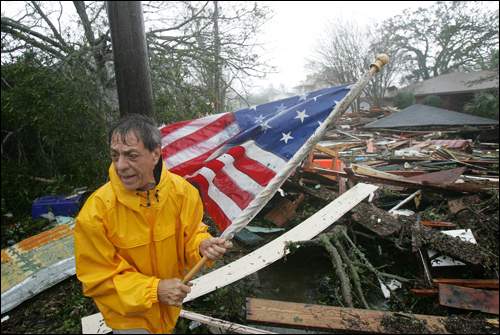
HURRICANE KATRINA DONATED GOODS CAMPAIGN FOR
FAMILIES IN GULFPORT, MS
The Saturday School at the Learning Bank of COIL, Inc. is collecting new and unopened goods for families in Gulfport, MS displaced by Hurricane Katrina.
The following is a WISH LIST of items that were requested by families in MS: (Upon their request, we ask that you DO NOT donate clothes or shoes!)
Lowe's Gift Cards
Wal-Mart Gift Cards
Linens (bed sheets, comforters)
Laundry Detergent
Back packs filled with school supplies (crayons, pens, pencils, notebooks, note book paper, etc.)
Personal Hygiene items (soap, deodorant, toothpaste, toothbrushes, shaving cream, etc.)
Plastic buckets filled with cleaning supplies (Lysol, Lysol wipes, sponges, etc.)
Bottled Water
Toilet Tissue
Tylenol/Advil
Toys (infant - teenage years)
Brooms/Mops
Hair combs/Brushes
Baby Diapers
Baby Wipes
Baby Bibs
Baby Lotion
Depends (adult diapers)
Flashlights
Batteries (aa, aaa, c, d)
Alarm Clocks
Anti-bacterial Soap
Paper cups/Paper plates
Plastic utensils
Please drop-off your new and unopened donated goods to 1200 W. Baltimore Street on the following dates:
December 3rd from 9:30 a.m. - 1 p.m.
December 10th from 9:30 a.m. - 1 p.m.
December 17th from 9:30 a.m. - 1 p.m.
All donated items will be delivered to the Little Rock Missionary Baptist Church located 4538 Old Pass Road in Gulfport, MS on December 26th.
**Gas Cards are also being accepted to help off-set the expense of gas to deliver the donated goods to MS.**
For more information contact Nathalia Gordon or Lynn Pinder at the Learning Bank of COIL, Inc. at 410-659-5452. Thank you for your support!
November 22, 2005
Sample Letter to ELECTED Officials regarding the eviction of Hurricane Katrina Victims
MMM FEMA ACTION
SAMPLE LETTER FOR ELECTED OFFICIALS
YOUR NAME
YOUR ADDRESS
DATE
Rep.________________ or Senator_______________________
US House of Representatives U.S. Senate
Washington, DC 20515 Washington, DC 20510
I was disappointed to learn that FEMA plans to evacuate more than 150.000 from hotels and other federally-supported housing on December 1. I am writing to urge you to take any and all action to reverse this ill-advised decision. As a member of the Millions More Movement, I am especially concerned about the number of displaced African Americans who are affected by this harsh and untimely action. The United States Senate has just adopted a resolution to display a statue of the civil rights icon, Mrs. Rosa Parks, in the capitol. Why would our government, then, evict people on the 50th anniversary of her historic action?
Something must be done. Please use your influence to urge Mr. R. David Paulison, FEMA’s acting director, to reverse this decision. While people desperately need permanent housing, untimely evictions will exacerbate, not reverse, the trauma hurricane victims have already suffered.
Thank you for your prompt action on this very critical matter.
Sincerely,
Your name (and organization if you like).
PLEASE FAX LETTERS TO MEMBERS OF CONGRESS – THEY RECEIVE MAIL ON A DELAYED BASIS. EMAIL ALSO WORKS.
The White House
1600 Pennsylvania Avenue NW
Washington, DC 20500
Comments: 202-456-1111
Switchboard: 202-456-1414
FAX: 202-456-2461
You can also email the White House at comments@whitehouse.gov
____________________________________________________________________
Lawsuit Filed to Protect Katrina Victims From Eviction; Louisiana's Eviction Procedures Violate Due Process
11/14/2005 5:07:00 PM
--------------------------------------------------------------------------------
To: National Desk
Contact: Sabrina Williams, 240-463-6875 or 202-728-9557, or Clair Koroma, 202-728-9557, both of Advancement Project
WASHINGTON, Nov. 14 /U.S. Newswire/ -- Today, a lawsuit was filed seeking a temporary restraining order to protect the interests of displaced residents, as a result of Hurricane Katrina. Ultimately, plaintiffs seek a declaration that Louisiana's eviction notice procedures are unconstitutional because they do not provide survivors an opportunity to be heard.
"Two months after Katrina, the residents of New Orleans most traumatized by the hurricane and its aftermath are now traumatized by the prospect of being evicted from their homes and losing all of their personal effects, without proper notice," said Judith Browne, co-director, Advancement Project, a national racial justice organization. "We merely want to establish fair rules, so that people can defend themselves, protect their personal property and their housing opportunities. Too many people are having their belongings thrown on the streets without due process as our Constitution requires."
Because Louisiana law merely requires that lessees whose whereabouts are unknown receive notice by tacking it to the door of the premises, tens of thousands of residents will be evicted without an opportunity to be heard. Factually, there is no realistic expectation that people who do not live in New Orleans, due to no fault of their own, but because of the devastating circumstances of Hurricane Katrina, will receive notice of eviction proceedings. If there is no expectation, that people will know, then this is a straightforward denial of due process. For example:
-- Janeice Sylvester resided in a rental apartment in Orleans Parish. Due to the hurricane, Sylvester is displaced and currently resides in LaPlace, La. When Sylvester visited her Hayne Blvd. apartment in early October, her belongings were in place and intact. During the time of her displacement from her apartment, Sylvester has made several attempts to contact her landlord, but has been unable to establish contact because the phone number was not functioning. On Nov. 4, Sylvester returned to her apartment to find a notice of eviction posted and a court date of Nov. 3. Sylvester has not been contacted by her landlord at any time, nor was there any known effort to establish contact with Sylvester.
-- For 17 years, Brenda Brooks has resided in the same rental property in New Orleans; she is currently displaced and living in Houston. Brooks first visited her apartment in early October. Brooks contacted the landlord and provided them with her temporary address in Texas and her cellular telephone number. During this conversation Brooks inquired whether there was anything she needed to do; she was told no. On Oct. 28, 29 and 31, Brooks returned to her apartment to clean it. At the time, there was no notice of any eviction proceedings. Brooks was subsequently told by a neighbor that a notice to vacate dated Oct. 27 had been posted on her door. Although she provided the landlord with her address in Texas, she has received no such notice by mail.
"Renters in New Orleans are facing evictions from landlords who want to renovate and charge higher rents to the out of town workers who populate the city," said Bill Quigley, lead counsel in the lawsuit. "Some renters have offered to pay their rent and are still being evicted. Others question why they should have to pay rent for September when they were not allowed to return to New Orleans."
The lawsuit brought against the Federal Emergency Management Agency, Clerks of the courts, and Constables contends that there are several ways to increase the likelihood that residents will have a chance to know that they are subject to eviction proceedings:
-- Extend the notice period to 60 days in order to give people a greater chance to learn about proceedings; and
-- Order the Federal Emergency Management Agency, which maintains information regarding the whereabouts of displaced residents to assist in the notice process and give adequate time for people to know what is happening and to have a chance to respond.
"Without such relief, displaced residents will be irreparably harmed by the loss of their housing opportunity and their personal property that is removed from the premises," concluded Quigley. "Haven't the residents in the Gulf Region lost enough?"
---
EDITOR'S NOTE: For a copy of the complaint, contact Sabrina Williams (swilliams@advancementproject.org or 240-463-6875) or Clair Koroma (ckoroma@advancementproject.org or 202-728-9557).
http://www.usnewswire.com/
-0-
/© 2005 U.S. Newswire 202-347-2770/
SAMPLE LETTER FOR ELECTED OFFICIALS
YOUR NAME
YOUR ADDRESS
DATE
Rep.________________ or Senator_______________________
US House of Representatives U.S. Senate
Washington, DC 20515 Washington, DC 20510
I was disappointed to learn that FEMA plans to evacuate more than 150.000 from hotels and other federally-supported housing on December 1. I am writing to urge you to take any and all action to reverse this ill-advised decision. As a member of the Millions More Movement, I am especially concerned about the number of displaced African Americans who are affected by this harsh and untimely action. The United States Senate has just adopted a resolution to display a statue of the civil rights icon, Mrs. Rosa Parks, in the capitol. Why would our government, then, evict people on the 50th anniversary of her historic action?
Something must be done. Please use your influence to urge Mr. R. David Paulison, FEMA’s acting director, to reverse this decision. While people desperately need permanent housing, untimely evictions will exacerbate, not reverse, the trauma hurricane victims have already suffered.
Thank you for your prompt action on this very critical matter.
Sincerely,
Your name (and organization if you like).
PLEASE FAX LETTERS TO MEMBERS OF CONGRESS – THEY RECEIVE MAIL ON A DELAYED BASIS. EMAIL ALSO WORKS.
The White House
1600 Pennsylvania Avenue NW
Washington, DC 20500
Comments: 202-456-1111
Switchboard: 202-456-1414
FAX: 202-456-2461
You can also email the White House at comments@whitehouse.gov
____________________________________________________________________
Lawsuit Filed to Protect Katrina Victims From Eviction; Louisiana's Eviction Procedures Violate Due Process
11/14/2005 5:07:00 PM
--------------------------------------------------------------------------------
To: National Desk
Contact: Sabrina Williams, 240-463-6875 or 202-728-9557, or Clair Koroma, 202-728-9557, both of Advancement Project
WASHINGTON, Nov. 14 /U.S. Newswire/ -- Today, a lawsuit was filed seeking a temporary restraining order to protect the interests of displaced residents, as a result of Hurricane Katrina. Ultimately, plaintiffs seek a declaration that Louisiana's eviction notice procedures are unconstitutional because they do not provide survivors an opportunity to be heard.
"Two months after Katrina, the residents of New Orleans most traumatized by the hurricane and its aftermath are now traumatized by the prospect of being evicted from their homes and losing all of their personal effects, without proper notice," said Judith Browne, co-director, Advancement Project, a national racial justice organization. "We merely want to establish fair rules, so that people can defend themselves, protect their personal property and their housing opportunities. Too many people are having their belongings thrown on the streets without due process as our Constitution requires."
Because Louisiana law merely requires that lessees whose whereabouts are unknown receive notice by tacking it to the door of the premises, tens of thousands of residents will be evicted without an opportunity to be heard. Factually, there is no realistic expectation that people who do not live in New Orleans, due to no fault of their own, but because of the devastating circumstances of Hurricane Katrina, will receive notice of eviction proceedings. If there is no expectation, that people will know, then this is a straightforward denial of due process. For example:
-- Janeice Sylvester resided in a rental apartment in Orleans Parish. Due to the hurricane, Sylvester is displaced and currently resides in LaPlace, La. When Sylvester visited her Hayne Blvd. apartment in early October, her belongings were in place and intact. During the time of her displacement from her apartment, Sylvester has made several attempts to contact her landlord, but has been unable to establish contact because the phone number was not functioning. On Nov. 4, Sylvester returned to her apartment to find a notice of eviction posted and a court date of Nov. 3. Sylvester has not been contacted by her landlord at any time, nor was there any known effort to establish contact with Sylvester.
-- For 17 years, Brenda Brooks has resided in the same rental property in New Orleans; she is currently displaced and living in Houston. Brooks first visited her apartment in early October. Brooks contacted the landlord and provided them with her temporary address in Texas and her cellular telephone number. During this conversation Brooks inquired whether there was anything she needed to do; she was told no. On Oct. 28, 29 and 31, Brooks returned to her apartment to clean it. At the time, there was no notice of any eviction proceedings. Brooks was subsequently told by a neighbor that a notice to vacate dated Oct. 27 had been posted on her door. Although she provided the landlord with her address in Texas, she has received no such notice by mail.
"Renters in New Orleans are facing evictions from landlords who want to renovate and charge higher rents to the out of town workers who populate the city," said Bill Quigley, lead counsel in the lawsuit. "Some renters have offered to pay their rent and are still being evicted. Others question why they should have to pay rent for September when they were not allowed to return to New Orleans."
The lawsuit brought against the Federal Emergency Management Agency, Clerks of the courts, and Constables contends that there are several ways to increase the likelihood that residents will have a chance to know that they are subject to eviction proceedings:
-- Extend the notice period to 60 days in order to give people a greater chance to learn about proceedings; and
-- Order the Federal Emergency Management Agency, which maintains information regarding the whereabouts of displaced residents to assist in the notice process and give adequate time for people to know what is happening and to have a chance to respond.
"Without such relief, displaced residents will be irreparably harmed by the loss of their housing opportunity and their personal property that is removed from the premises," concluded Quigley. "Haven't the residents in the Gulf Region lost enough?"
---
EDITOR'S NOTE: For a copy of the complaint, contact Sabrina Williams (swilliams@advancementproject.org or 240-463-6875) or Clair Koroma (ckoroma@advancementproject.org or 202-728-9557).
http://www.usnewswire.com/
-0-
/© 2005 U.S. Newswire 202-347-2770/
November 17, 2005
January 1, 2006 - New Year's Charity Concert

Experience an incredible time in God as Restoring Life International Church help those affected by Hurricane Katrina. Admission only $10.
November 16, 2005
Hurricane Katrina Donated Goods Drive for Families in MS
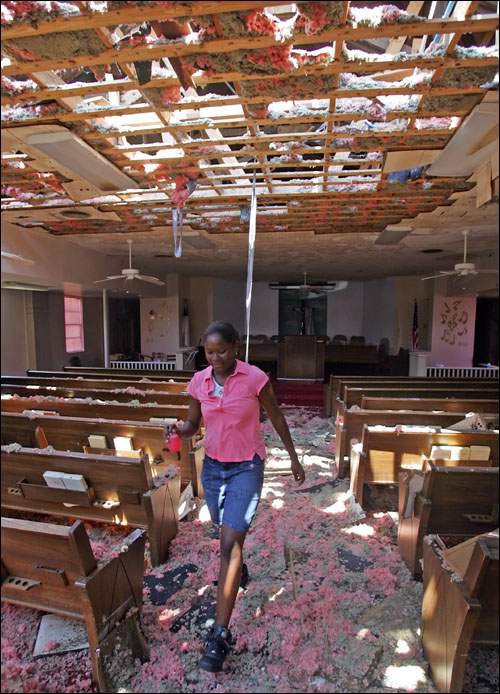
The Saturday School at the Learning Bank of COIL, Inc. (located 1200 W. Baltimore Street) is collecting new and unopened goods for families in Gulfport, MS displaced by Hurricane Katrina on the following Saturdays:
November 19th from 9:30 a.m. - 1 p.m.
December 3rd from 9:30 a.m. - 1 p.m.
December 10th from 9:30 a.m. - 1 p.m.
December 17th from 9:30 a.m. - 1 p.m.
All donated items will be delivered to Little Rock Missionary Baptist Church located 4538 Old Pass Road in Gulfport, MS.
The following is a list of items that were requested by families in MS: (Please do not donate clothes or shoes!)
Lowe's Gift Cards
Walmart Gift Cards
baby diapers
baby wipes
baby bibs
baby lotion
Depends (adult diapers)
Bottled Water
Toilet Tissue
Linens (bed sheets, comforters)
Laundry Detergent
Tylenol/Advil
Toys (infant - teenage years)
Brooms/Mops
Flashlights
Batteries (aa, aaa, c, d)
Alarm clocks
Anti-bacterial soap
Paper cups/plates
Plastic utensils
Back packs filled with school supplies
Personal Hygiene items (soap, deodorant, toothpaste, toothbrushes, shaving cream, etc.)
Plastic buckets filled with cleaning supplies (lysol, lysol wipes, sponges, etc.)
As we will be driving the donations to MS, we will also accept Gas Gift Cards to help offset the costs for fuel for our journey. If you are unable to donate an item, please pray for the families impacted by Hurricane Katrina for their lives are forever changed. For more information email ywaction1@yahoo.com.
November 14, 2005
Praise Report - THROUGH THE FIRE!
Early Saturday morning like at 1:00 a.m. I was awakened to screams and banging on my door only to open my eyes to a room full of smoke. I was a bit disoriented but knew to go straight to the door where I could hear the constant pounding. When I opened the front door, I met two firemen with oxygen masks in the hallway filled with black smoke. One fireman immediately began to ask if anyone else was in my apartment and told me that he had to get me out the building immediately. The smoke was so thick in the hallway I had to grab the fireman's hand to be led out the building. I get outside and it's like five or six fire trucks outside and people everywhere with concerned looks on their face. Because of all of the smoke everyone assumed the fire was in my building but it was actually in the house next door. The house next door to me, unfortunately was destroyed, but God...
Let me stop here and send out a praise shout -
HALLELUJAH! GLORY BE TO GOD! THANK YOU JESUS!
The house next door was destroyed, smoke filled my apartment building and my apartment, our smoke detectors did not go off, but NO ONE was hurt or injured.
PRAISE GOD! THANK YOU JESUS!
No one was hurt! Possessions were lost. Clothes and belongings in my apartment are smoke stained, but everyone walked away with their lives - no one even needed emergency medic services!
HALLELUJAH! GLORY!
Of course we were all shaken. I had to sleep at a neighbor's house two doors down until the smoke smell decreased enough for me to come back into my apartment and start the cleanup and airing out of the apartment. I think for the first day or so on Saturday and Sunday I was in somewhat of shock because I realized that I could have just died in my sleep from smoke inhalation, but GOD!
HALLELUJAH! THANK YOU JESUS!
I am so thankful for my life? There are so many other reasons why I should be and am thankful, but I this weekend I experienced thankfulness on a whole new level.
THANK YOU JESUS!
"He who dwells in the shelter of the Most High will rest in the shadow of the Almighty. I will say of the Lord, 'He is my refuge and my fortress, my God, in whom I trust.' Surely He will save you from the fowler's snare and from the deadly pestilence. He will cover you with his feathers, and under His wings you will find refuge; his faithfulness will be your shield and rampart, You will not fear the terror of night, nor the arrow that flies by day, nor the pestilence that stalks in the darkness, nor the plague that destroys at midday. A thousand may fall at your side, ten thousand at your right hand, but it will not come near you. You will only observe with your eyes and see the punishment of the wicked.
If you make the Most High your dwelling - even the Lord, who is my refuge, then no harm will befall you, no disaster will come near your tent for he will command his angels concerning you to guard you in all your ways; they will lift you up in their hands so that you will not strike your foot against a stone. You will tread upon the lion and the cobra; you will trample the great lion and the serpent.
Because he loves me, says the Lord, 'I will rescue him; I will protect him for he acknowledges my name. He will call upon me, and I will and answer him; I will be with him in trouble. I will deliver him and honor him with long life and I satisfy him and show him my salvation." Psalm 91
I believe it and receive it! HALLELUJAH!
Let me stop here and send out a praise shout -
HALLELUJAH! GLORY BE TO GOD! THANK YOU JESUS!
The house next door was destroyed, smoke filled my apartment building and my apartment, our smoke detectors did not go off, but NO ONE was hurt or injured.
PRAISE GOD! THANK YOU JESUS!
No one was hurt! Possessions were lost. Clothes and belongings in my apartment are smoke stained, but everyone walked away with their lives - no one even needed emergency medic services!
HALLELUJAH! GLORY!
Of course we were all shaken. I had to sleep at a neighbor's house two doors down until the smoke smell decreased enough for me to come back into my apartment and start the cleanup and airing out of the apartment. I think for the first day or so on Saturday and Sunday I was in somewhat of shock because I realized that I could have just died in my sleep from smoke inhalation, but GOD!
HALLELUJAH! THANK YOU JESUS!
I am so thankful for my life? There are so many other reasons why I should be and am thankful, but I this weekend I experienced thankfulness on a whole new level.
THANK YOU JESUS!
"He who dwells in the shelter of the Most High will rest in the shadow of the Almighty. I will say of the Lord, 'He is my refuge and my fortress, my God, in whom I trust.' Surely He will save you from the fowler's snare and from the deadly pestilence. He will cover you with his feathers, and under His wings you will find refuge; his faithfulness will be your shield and rampart, You will not fear the terror of night, nor the arrow that flies by day, nor the pestilence that stalks in the darkness, nor the plague that destroys at midday. A thousand may fall at your side, ten thousand at your right hand, but it will not come near you. You will only observe with your eyes and see the punishment of the wicked.
If you make the Most High your dwelling - even the Lord, who is my refuge, then no harm will befall you, no disaster will come near your tent for he will command his angels concerning you to guard you in all your ways; they will lift you up in their hands so that you will not strike your foot against a stone. You will tread upon the lion and the cobra; you will trample the great lion and the serpent.
Because he loves me, says the Lord, 'I will rescue him; I will protect him for he acknowledges my name. He will call upon me, and I will and answer him; I will be with him in trouble. I will deliver him and honor him with long life and I satisfy him and show him my salvation." Psalm 91
I believe it and receive it! HALLELUJAH!
October 31, 2005
Rosa Parks (1913 - 2005)
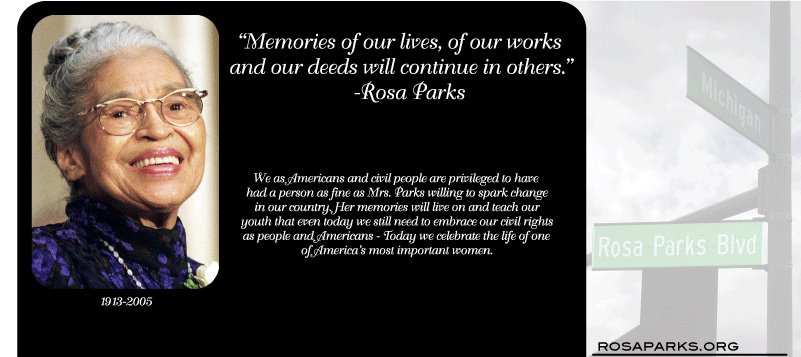
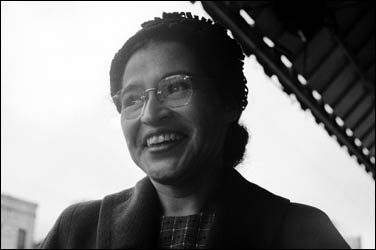
October 31, 2005
Today, started out a normal day. I awoke at 5:30 a.m. I was out the door by 6:35 a.m. I got to the train station at 7:00 a.m. and was at work by 8:30 a.m. I set at my desk checked my emails, listened to my voicemails, and read my daily devotional. Between returning phone calls, checking in on my Lifelong Learning Coaches, and my grantees I was informed that the CEO of my organization gave permission to everyone to attend the funeral of Ms. Rosa Parks (the second of three funerals held in three days). I sat at my desk contemplating whether or not I should attend. I had loads a work, plus a site visit to complete later that day and hardly any of my co-workers seemed interested in going. By this time it was 11 a.m. and I had decided to go alone if I was unable to get any of my co-workers to go with me. The funeral was scheduled to begin at 1 p.m. but we knew that the lines were going to be long and they were.
When I and my co-worker, Krsna, walked the three blocks at 12 Noon from our office to the historic Metropolitan A.M.E. Church the line was wrapped around the corner and into an alley. We waited patiently in line with about 100 people. 12:30 p.m. and we had just made it out of the alley onto 15th Street. 1:00 p.m. and we were just at the corner of 15th and M Streets. The church, however, was in our view and we could hear the singing of the choir (traditional hymns) coming from speakers that had been set-up outside the church. We also got a glimpse of the 100 or so other on-lookers who were camped across the street from the church. 1:15 p.m. we make it half way up the street and reach a table of bottled water. Thank you, Lord. We are both hungry and thirsty because we hadn't eaten lunch. There just wasn't any time. We were serious about getting into this funeral. 1:30 p.m. and we are about half way to the front entrance of the church when the guards and police officers start walking the line announcing that the church was filled to capacity. At that point, people just started jumping out of line to run across the street to the overflow room. Krsna and I just moved right on up until we were right in front of the hearse and at the entrance of the church. 2:00 p.m. we are all standing outside listening to Dr. Dorothy Height and Congresswoman Eleanor Holmes Norton. 2:05 p.m. Krsna spots her former mentor and she goes to speak to him and I lose her in the crowd. 2:15 p.m. I look up to see Krsna walking up the stairs inside the church. At this point, I'm like o.k. I can't believe she left me, but I heard a still small voice tell me to find the gentleman that she knew. 2:20 p.m. I approach the gentleman that Krsna knows who just happens to be one of the people who decides who gets to go into the church. I tell him that I work with Krsna and that were together but got separated. Now, this is amazing he looks at me. This guy doesn't know me at all, but he knows my co-worker and when I mention her name he nods and tells me to wait a minute on the side. I stand still and wait patiently. He comes up to me and points me to the gate and at 2:30 p.m. I'm walking up the stairs into the church. 2:35 p.m. I'm sitting beside Krsna downstairs in the overflow room watching the funeral on the big screen t.v. and Krsna is laughing at me because I got left behind. 2:40 p.m. Krsna and I look at each other with the same determined look. We just had to get upstairs to the sanctuary to see the funeral with our own eyes. 2:45 p.m. we start for the stairs and reach the top which is cramped to capacity. We stand at the back of the sanctuary while Oprah Winfrey speaks. Of course there was a crowd just to see her and to our benefit they left out of the balcony once she was done. 2:50 p.m. Krsna and I are headed up the stairs to the balcony. Wow, what a view. I use her phone to cancel my 3:00 p.m. site visit and we both are standing there on the balcony with tears in our eyes overwhelmed by the fact that we are attending the funeral of Ms. Rosa Parks. Ms. Cicely Tyson comes to the microphone and stirs everyone to tears and to their feet with her rendition of Ms. Jane Pittman reciting the poem, "Life Ain't No Crystal Stair" as she honors Ms. Rosa Parks. 3:15 p.m. and celebrity after celebrity, news anchors like Gwen Ifill all pay tribute to Ms. Rosa Parks. Senator Ted Kennedy wows the crowd with a personalized version of the 23rd Psalm in honor of Ms. Parks.
I'm standing in that balcony scanning the room seeing famous and non-famous, black and white people and people of a lot of other races all together with looks of awe on their face. I see someone guarded by half of dozen Secret Servicemen who looks like Donald Rumsfield and I'm thinking I can't believe I'm here in this place, too. I begin thanking God for the opportunity to be part of this historic event. Then, Ms. Tramaine Hawkins comes to the mike and sings a soulful version of Amazing Grace that brings everyone to tears - heads nodding, feet stomping, and hands clapping. What a day!
I never thought when I woke up this morning that I would be attending the funeral of one of the most famous giants of the Civil Rights Movement. As a matter of fact, I started to roll over and call in sick. What a blessing I would have missed if I had.
4:05 p.m. the service is almost over and Krsna and I decide to go back to work before the crowd leaves as we walk out the church and up the street, we hear the church singing "We Shall Overcome." People were stopped in their tracks for blocks just looking and listening. We are walking back to the office and I'm thanking God, thanking Krsna for coming and hooking us up with the guy who let us in who come to find out was one of her mentors from when she was a teenager. Wow! I'm like walking in awe, reverence, and respect for the life of a small woman who made a huge impact to our world. Ms. Rosa Parks was truly a woman of courage and faith.
Thank you Lord for giving me the opportunity to be part of the Homegoing Celebration of the life of this great lady!
Note: Ms. Parks first funeral was in Selma, Alabama. Then, her body was on view at our nation's Capitol. Her final funeral will be held November 1st in Detroit, MI.
October 30, 2005
WEAA 88.9 VS Minister Duane Johnson
I was listening that Sunday morning that will probably go down in history for WEAA 88.9 Gospel Grace when Minister Duane Johnson took the airways to denounce the now infamous Gay Pride Week at Pikesville High School. He has since been suspended as the Director/Announcer for Gospel Grace and will be removed on November 7th. I'm not in agreement with this decision and feel it wrong that Minister Johnson will be suspended for his belief in the Word of God (the Holy Bible). However, I do feel that Minister Johnson should have taken more time and preparation to follow station protocol and to minister to the young people at Pikesville High School.
I've read a lot of different blogs commenting on Minister Johnson's actions. As I read through the many blogs and websites I am particularly struck by the level of unkindness and sarcasm that seem to permeate through many of these so-called "Christian" blogs. One thing that is clear to me is that I don't live in a Jesus friendly society, neither did Jesus. Although many claim to be followers of Christ, most really are just "Christians" in name only with no idea of what it is to develop a real relationship with God and accept true salvation through Jesus Christ -not just in words, but in deeds and actions - not just on Sundays, but every minute of the hour and every hour of the day - not just when it feels good, but when it feels uncomfortable, lonely, and confusing - not just for show, but for real.
I prayed before posting this blog because I didn't want my remarks to come across as bitter, sarcastic, or unkind. (Let me say that the issue of kindness is one that is real for me right now as I had someone tell me a few weeks ago that I was "mean and nasty." I had to repent because even though I thought I was the nicest person in the world and had every right to be angry at the person who made the statement that person who was obviously hurt by my comments felt otherwise. This reality whether I want to accept or not means that I was an ineffective light/minister of God in this situation. I've been praying for guidance and resolution from God on just how to be more effective in my walk as a daughter of Christ. But that's a story for another blog, but I use this example to demonstrate what I feel about Minister Johnson's effort on that faithful Sunday.) I do believe that although Minister Johnson meant well his method was ineffective and sloppy.
Another thing I know for sure is that the issue/spirit of Homosexuality is one that can not be faced without proper covering, prayer, and weaponry for warfare. Homosexuality, a stronghold that is deceiving too many of our young and old, is not an issue/spirit to take lightly or to tackle in the heat of the moment without proper planning. We must put on the full armor of God for our struggle is not against flesh and blood, but against the rulers, against the authorities, against the powers of this dark world and against the spiritual forces of evil in the heavenly realms. I'm praying that Minister Johnson and other people of faith become more strategic in ministry efforts against this issue/spirit, particularly when it deals with young people.
In the meantime, I encourage you to email earlsr@morgan.edu and pblakely@moac.morgan.edu to voice your dissent over the firing of Minister Duane Johnson
Suggested Readings:
The Holy Bible
The Isis Papers - Dr. Francis Cress Welsing
God's House Party - Dr. Kenneth Robinson
I've read a lot of different blogs commenting on Minister Johnson's actions. As I read through the many blogs and websites I am particularly struck by the level of unkindness and sarcasm that seem to permeate through many of these so-called "Christian" blogs. One thing that is clear to me is that I don't live in a Jesus friendly society, neither did Jesus. Although many claim to be followers of Christ, most really are just "Christians" in name only with no idea of what it is to develop a real relationship with God and accept true salvation through Jesus Christ -not just in words, but in deeds and actions - not just on Sundays, but every minute of the hour and every hour of the day - not just when it feels good, but when it feels uncomfortable, lonely, and confusing - not just for show, but for real.
I prayed before posting this blog because I didn't want my remarks to come across as bitter, sarcastic, or unkind. (Let me say that the issue of kindness is one that is real for me right now as I had someone tell me a few weeks ago that I was "mean and nasty." I had to repent because even though I thought I was the nicest person in the world and had every right to be angry at the person who made the statement that person who was obviously hurt by my comments felt otherwise. This reality whether I want to accept or not means that I was an ineffective light/minister of God in this situation. I've been praying for guidance and resolution from God on just how to be more effective in my walk as a daughter of Christ. But that's a story for another blog, but I use this example to demonstrate what I feel about Minister Johnson's effort on that faithful Sunday.) I do believe that although Minister Johnson meant well his method was ineffective and sloppy.
Another thing I know for sure is that the issue/spirit of Homosexuality is one that can not be faced without proper covering, prayer, and weaponry for warfare. Homosexuality, a stronghold that is deceiving too many of our young and old, is not an issue/spirit to take lightly or to tackle in the heat of the moment without proper planning. We must put on the full armor of God for our struggle is not against flesh and blood, but against the rulers, against the authorities, against the powers of this dark world and against the spiritual forces of evil in the heavenly realms. I'm praying that Minister Johnson and other people of faith become more strategic in ministry efforts against this issue/spirit, particularly when it deals with young people.
In the meantime, I encourage you to email earlsr@morgan.edu and pblakely@moac.morgan.edu to voice your dissent over the firing of Minister Duane Johnson
Suggested Readings:
The Holy Bible
The Isis Papers - Dr. Francis Cress Welsing
God's House Party - Dr. Kenneth Robinson
October 27, 2005
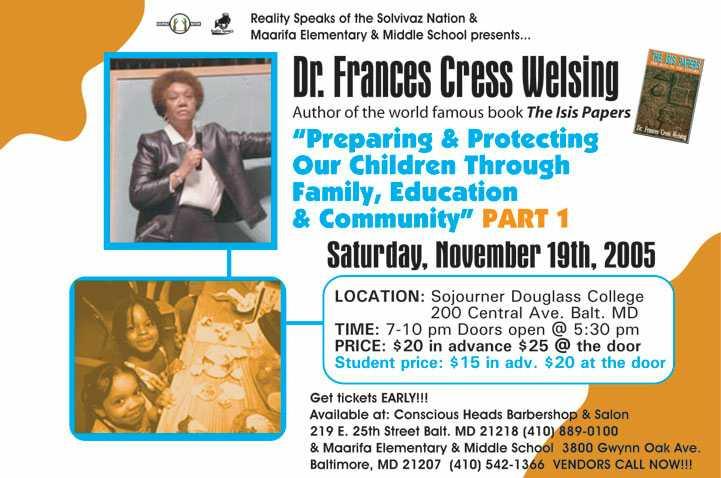
October 24, 2005
Life is Not a Fairy Tale

American Idol Winner Fantasia Barrino has a new book out called, "Life is Not a Fairy Tale." Although she is getting a lot of slack for her honest candor about her experience in her hometown, the book is very well written. It is not only inspirational, but the book is really her own testimony on how she overcame some tremendous life barriers and developed a relationship with Christ on her road to stardom on American Idol.
I would recommend this book to everyone, especially young people. This would be a good book to use for a book discussion as part of a teen youth ministry. Fantasia is extremely honest about her own illiteracy and other issues impacting young females. She also touches on a sensitive issue when she admits that her baby's daddy is a PK (Preacher's Kid). Each chapter ends with a faith statement by Fantasia, a scripture, and a summary of the main lessons she learned from the experiences she shared in the chapter.
I was really impressed with the book. I am so proud of Fantasia and am even prouder that she has made a public declaration regarding her love for Christ. In her own way, Fantasia's book minister to readers using her life story as a link to scriptural references that help people understand God's connection in their lives.
It took courage and faith to share her story as she did in this book. Please keep Fantasia Barrino in prayer. Pray that the love of God and the Holy Spirit continues to be an active part in her life and the lives of her family. Pray for her protection and victory over any and all tricks of the adversary. Pray that she perserves in her educational pursuits to obtain her GED and to attend college.
Be sure to Buy Fantasia's Book!
October 23, 2005
AND THEY CALLED THEMSELVES FISHERMEN
"And They CALLED THEMSELVES FISHERMEN"
-Author Unknown.
A group existed who called themselves fisherman. There were many fish in the waters around. In truth, the whole area was surrounded by streams and lakes filled with fish. And the fish were hungry.
It came to pass that week after week, month after month, and year after year those who called themselves fishermen met in meetings; they talked about their call to fish, the abundance of fish, and how they might go about fishing. They carefully analyzed what fishing meant, urged fishing as an occupation, and declared that fishing is always to be a primary task of fisherman.
These same fishermen built large, beautiful buildings for local fishing headquarters. Their plea was that everyone should be a fisherman and that every fisherman should fish. In addition to meeting regularly, they organized a board to send out fisherman to other places where there were many fish. The board was formed by those who had the great vision and courage to speak about fishing, to define fishing, and to promote the idea of fishing in faraway streams and lakes where many fish of different colors swam. Furthermore, the board hired staff and appointed committees and held many meetings to issue statements on fishing, to agree on what new streams should be thought about. Large, elaborate and expensive training centers were built with the original and primary purpose of
teaching fisherman how to fish.
Over the years, courses were offered on the needs of fish, the nature of fish, how to recognize different fish, the psychological reactions of fish, the various backgrounds of fish, and how to approach and feed fish. Those who taught had doctorates in "fishiology" Further, the fisherman built large printing houses to publish fishing guides. Presses were kept busy day and night to produce materials solely devoted to fishing methods and equipment. Meetings were arranged to talk about fishing. An expert speaker's bureau was also provided to schedule special speakers on the subject of fishing.
Notwithstanding all this activity, it was noted that fisherman themselves did not fish: they pleaded for fishing. The boards did not fish: they planned for fishing. The teachers of fishiology did not fish. They explained fishing. The expert speakers did not fish. They preached about fishing.
However, after one stirring address on "The Necessity of Fishing", one young man left the meeting and went fishing. The next day he reported that he had caught two outstanding fish. He was honored for his excellent catch and scheduled to visit all the big meetings possible to tell how he had done it. In fact he quit his fishing in order to have time to tell about the experience to the other fisherman. He was also placed on the Fisherman's General Board as a person having considerable experience.
Now many of the fishermen made sacrifices and put up with all kinds of difficulties. Few were well paid for their service on the boards and training centers. Some lived near the water and bore the smell of dead fish. They received the ridicule of some that made fun of their fisherman's clubs and the fact that they claimed to be fisherman, yet never fished. They had doubts about those who felt it was of little use to attend and talk about fishing. After all, were they not following the one who said: "Follow Me, and I will make you fishers of men." (Matt 4:19)
It came about that one day someone made the outlandish suggestion that those who did not fish were not actually fishermen - - no matter how much they claimed to be. Someone actually asked: "Is a person a fisherman if year after year he never catches (or even tries to catch) a fish? If he is not fishing, can he be following?" Those who called themselves fishermen, and their boards and committees and training centers and speakers, were all very hurt by that question.
What is your excuse for not fishing? BE RADICAL, GO FISHING!
-Author Unknown.
A group existed who called themselves fisherman. There were many fish in the waters around. In truth, the whole area was surrounded by streams and lakes filled with fish. And the fish were hungry.
It came to pass that week after week, month after month, and year after year those who called themselves fishermen met in meetings; they talked about their call to fish, the abundance of fish, and how they might go about fishing. They carefully analyzed what fishing meant, urged fishing as an occupation, and declared that fishing is always to be a primary task of fisherman.
These same fishermen built large, beautiful buildings for local fishing headquarters. Their plea was that everyone should be a fisherman and that every fisherman should fish. In addition to meeting regularly, they organized a board to send out fisherman to other places where there were many fish. The board was formed by those who had the great vision and courage to speak about fishing, to define fishing, and to promote the idea of fishing in faraway streams and lakes where many fish of different colors swam. Furthermore, the board hired staff and appointed committees and held many meetings to issue statements on fishing, to agree on what new streams should be thought about. Large, elaborate and expensive training centers were built with the original and primary purpose of
teaching fisherman how to fish.
Over the years, courses were offered on the needs of fish, the nature of fish, how to recognize different fish, the psychological reactions of fish, the various backgrounds of fish, and how to approach and feed fish. Those who taught had doctorates in "fishiology" Further, the fisherman built large printing houses to publish fishing guides. Presses were kept busy day and night to produce materials solely devoted to fishing methods and equipment. Meetings were arranged to talk about fishing. An expert speaker's bureau was also provided to schedule special speakers on the subject of fishing.
Notwithstanding all this activity, it was noted that fisherman themselves did not fish: they pleaded for fishing. The boards did not fish: they planned for fishing. The teachers of fishiology did not fish. They explained fishing. The expert speakers did not fish. They preached about fishing.
However, after one stirring address on "The Necessity of Fishing", one young man left the meeting and went fishing. The next day he reported that he had caught two outstanding fish. He was honored for his excellent catch and scheduled to visit all the big meetings possible to tell how he had done it. In fact he quit his fishing in order to have time to tell about the experience to the other fisherman. He was also placed on the Fisherman's General Board as a person having considerable experience.
Now many of the fishermen made sacrifices and put up with all kinds of difficulties. Few were well paid for their service on the boards and training centers. Some lived near the water and bore the smell of dead fish. They received the ridicule of some that made fun of their fisherman's clubs and the fact that they claimed to be fisherman, yet never fished. They had doubts about those who felt it was of little use to attend and talk about fishing. After all, were they not following the one who said: "Follow Me, and I will make you fishers of men." (Matt 4:19)
It came about that one day someone made the outlandish suggestion that those who did not fish were not actually fishermen - - no matter how much they claimed to be. Someone actually asked: "Is a person a fisherman if year after year he never catches (or even tries to catch) a fish? If he is not fishing, can he be following?" Those who called themselves fishermen, and their boards and committees and training centers and speakers, were all very hurt by that question.
What is your excuse for not fishing? BE RADICAL, GO FISHING!
Prayer for families in the path of Hurricane Wilma
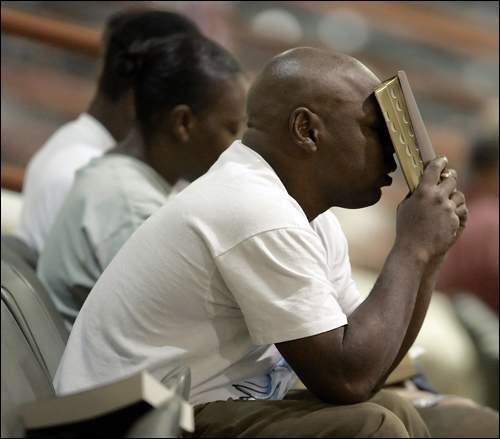
"You will tread upon the lion and the cobra; you will trample the great lion and the serpent. Because he loves me," says the LORD, "I will rescue him; I will protect him, for he acknowledges my name. He will call upon me, and I will answer him;
I will be with him in trouble, I will deliver him and honor him. With long life will I satisfy him and show him my salvation." --Psalm 91:13-16
Lord God, I thank you for the opportunity to come before you today. You are a great and awesome God. I thank you for your glory, goodness, and grace. I come before you again Lord asking for mercy, protection, and safety for those families in the path of yet another monster storm. Lord, I know that ALL things work together for good for those who are called according to your purpose, so Lord I won't ask why, but I will ask a special prayer of mercy for all those in the path of Hurricane Wilma. Lord, I ask that the light of those who know you shine like a light house guiding the lost and weary souls from this monster storm into an understanding of Jesus the Christ and to salvation. Lord, I pray that you anoint the volunteers, the relief workers, and all those extending a helping hand to these weary families. Anoint them with your Holy Spirit, anoint them with extra love, kindness, mercy, grace, understanding, patience, and kindness. Lord extend bounds of love and protection on those families impacted by this hurricane. Lord, I thank you for victory in the wake of this storm. In Jesus name I pray. Amen.
October 21, 2005
October 21 Daily Devotional
October 21
Impulsiveness or Discipleship?
But you, beloved, building yourselves up on your most holy faith . . .
—Jude 20
There was nothing of the nature of impulsive or thoughtless action about our Lord, but only a calm strength that never got into a panic. Most of us develop our Christianity along the lines of our own nature, not along the lines of God’s nature. Impulsiveness is a trait of the natural life, and our Lord always ignores it, because it hinders the development of the life of a disciple. Watch how the Spirit of God gives a sense of restraint to impulsiveness, suddenly bringing us a feeling of self-conscious foolishness, which makes us instantly want to vindicate ourselves. Impulsiveness is all right in a child, but is disastrous in a man or woman—an impulsive adult is always a spoiled person. Impulsiveness needs to be trained into intuition through discipline.
Discipleship is built entirely on the supernatural grace of God. Walking on water is easy to someone with impulsive boldness, but walking on dry land as a disciple of Jesus Christ is something altogether different. Peter walked on the water to go to Jesus, but he "followed Him at a distance" on dry land ( Mark 14:54 ). We do not need the grace of God to withstand crises—human nature and pride are sufficient for us to face the stress and strain magnificently. But it does require the supernatural grace of God to live twenty-four hours of every day as a saint, going through drudgery, and living an ordinary, unnoticed, and ignored existence as a disciple of Jesus. It is ingrained in us that we have to do exceptional things for God—but we do not. We have to be exceptional in the ordinary things of life, and holy on the ordinary streets, among ordinary people—and this is not learned in five minutes.
Source: http://www.rbc.org/utmost/
Impulsiveness or Discipleship?
But you, beloved, building yourselves up on your most holy faith . . .
—Jude 20
There was nothing of the nature of impulsive or thoughtless action about our Lord, but only a calm strength that never got into a panic. Most of us develop our Christianity along the lines of our own nature, not along the lines of God’s nature. Impulsiveness is a trait of the natural life, and our Lord always ignores it, because it hinders the development of the life of a disciple. Watch how the Spirit of God gives a sense of restraint to impulsiveness, suddenly bringing us a feeling of self-conscious foolishness, which makes us instantly want to vindicate ourselves. Impulsiveness is all right in a child, but is disastrous in a man or woman—an impulsive adult is always a spoiled person. Impulsiveness needs to be trained into intuition through discipline.
Discipleship is built entirely on the supernatural grace of God. Walking on water is easy to someone with impulsive boldness, but walking on dry land as a disciple of Jesus Christ is something altogether different. Peter walked on the water to go to Jesus, but he "followed Him at a distance" on dry land ( Mark 14:54 ). We do not need the grace of God to withstand crises—human nature and pride are sufficient for us to face the stress and strain magnificently. But it does require the supernatural grace of God to live twenty-four hours of every day as a saint, going through drudgery, and living an ordinary, unnoticed, and ignored existence as a disciple of Jesus. It is ingrained in us that we have to do exceptional things for God—but we do not. We have to be exceptional in the ordinary things of life, and holy on the ordinary streets, among ordinary people—and this is not learned in five minutes.
Source: http://www.rbc.org/utmost/
October 17, 2005
The Children's First Movement

CHILDREN 1st MOVEMENT
EDUCATION MANIFESTO
"Education is our passport to the future, for tomorrow belongs to the people who prepare for it today."
- Malcolm X
Overview Statement
All children in this country have the right to an education that enables them to learn and achieve at the highest level possible. This is a Human Right. To actualize this right, and therefore each child's potential, specific opportunities and support mechanisms or "Common Characteristics" must be present. No one characteristic is more important than another. All are required to provide the structure for ultimate student achievement and success.
The Baltimore City Public School System (BCPSS) must increase the educational options for all students. Parents must be empowered to become advocates for their children. BCPSS must provide an education that enables all students to make successful transitions to adulthood and to become vital contributors to their communities and to the world community.
We, as concerned citizens in Baltimore, are totally dedicated to assuring that our children receive what is rightfully theirs.
Background
In a report authored by Dr. Michelle A. Gambone several crucial elements necessary for student success were identified. BCPSS must embrace these elements, thus creating an environment in which students:
1. experience learning that is productive and linked to "Real World" activities;
2. are connected to adults, peers, and society's institutions;
3. can navigate through diverse settings, relationships, and the lure of risky behavior;
4. have relationships that are emotionally supportive with adults showing interests in youth's time and activities;
5. participate in decision-making in developmentally appropriate ways, relating to things they care about.
Common Characteristics
In order for BCPSS to achieve the elements described by Dr. Gambone, which are necessary for student success, the following Common Characteristics are necessary:
1. The Baltimore Public Schools (BCPSS) must be student-centered. To support the needs of each student, the educational process must be highly personalized. The District must embrace, as fundamental, the concept of educating "one student at a time." Students must have access to culturally relevant and rigorous curricula.
2. Smaller class size can produce improvement in student achievement, especially for minority and low-income students. The vision for BCPSS is to educate one student at a time and to encourage all students to pursue their interests and grow academically.
Each school must be small enough to allow teachers, administrators and students to work together as a unit for at least two years, thus developing and implementing meaningful long-term relationships and a safe, positive, inclusive community that fosters a culture of respect for each student.
Class size alone will not make the difference for improving student achievement. The quality of teaching must also be improved.
Class Sizes Must be legislated so they are no arbitrarily changed. This will also provide stability and a consistency for Quality Teachers. It indicates a Commitment to Excellence.
Guidelines for Class Size:
- Pre - K 20 students to 1 teacher w/aide
- Kindergarten 15 students to 1 teacher
- Grades 1 - 3 18 students to 1 teacher
- Grades 4 & 5 20 students to 1 teacher
- Grades 6 - 8 20 students to 1 teacher (25 Max.)
- Grades 9 - 12 20 students to 1 teacher (25 Max)
* Class size for math, science and English classes, grades 6 - 12 should be no more than 20 students to 1 teacher.
3. Developed curricula must be rigorous, culturally inclusive and prepare students to excel by community, local, state, international, higher education and workforce standards. In a school system that is over ninety percent African-American – there must me a strong Afro-centric curriculum. This helps build self-esteem which leads to student confidence and success.
4. Accountability for student performance must be owned/shared by teachers, administrators, parents and students. Aggressive performance goals should be
developed as well as consequences for results achieved. All of the stakeholders must participate in developing these performance goals.
5. The school district must maintain strong partnerships with area colleges, universities, community organizations and businesses to assure that
curricula are relevant, students are afforded the best technological preparation possible and encouragement/support is given frequently.
6. Highly qualified teachers and administrators must be in each school. Academic Coaches should be employed to support teachers, helping them to make connections
among themselves, their students, and their content area. Academic Coaches help to retain teachers. They focus on improving student achievement by improving
teacher effectiveness and competency. Academic Coaches lead specific activities focused on student achievement, work across grade and content levels,
plan and facilitate job-embedded professional development, and strengthen ties to
parents/caregivers.
7. Parents/caretakers must become knowledgeable advocates for their children, thus enabling them to work effectively with teachers and administrators. Such partnerships will ensure establishment of the best possible learning environs for each child and will ensure that learning does not start and end at the doors to the school houses.
8. Comprehensive intervention processes, both instructional and social, must be available and utilized as necessary to ensure student success.
9. Schools must provide for "real world" learning such as internships, both paid and unpaid, and service learning experiences. Such experiences augment classroom endeavors and afford valuable opportunities to put theory into practice.
10. An uncompromising commitment to diversity and inclusion must be apparent at all levels within the school district, including within the North Avenue senior administration group. Reality must now match the rhetoric.
Closing Statement
The Baltimore Public School System is a microcosm of society. It must be a bastion of ethical behavior, and a place where students can develop a personal ethics
code which will guide them throughout life.
Decisions are made within administrations which affect everyone, staff, students, and parents. These decisions must be models of ethical consideration for everyone and must serve as examples for the city and indeed, the state. BCPSS must examine the decisions being made daily and how these decisions impact the common characteristics necessary for student success. Honesty is an important trait. If the BCPSS promise the people a National Search for the most qualified leader – it must honor that commitment, otherwise the people will lack faith in the honesty of the leaders and the system will collapse. Morality is part of a complete and effective education.
To develop and institutionalize the Common Characteristics, robust initiatives must be established and implemented. Partnerships with strong representation from parents, administrators, teachers, students and community leaders must be created. Walls separating various factions must be removed, and we must begin to trust. The trust required for success will evolve if each of us personally commits to dealing with each other honestly and truthfully as we strive to reach our goals.
The Children 1st Movement solidly believes in the Frankenstein Theory – “Whatever we create we will eventually confront.” If we create brilliant, well educated, well prepared children of high self-esteem and confidence we will meet them in the businesses, hospitals as doctors and in the high political places of this country. If we fail to properly educate the youth – then we will confront the results of our creation - of bad education and miseducation in the streets of this and other cities. We will have created the hand that will be at our throats.
Remember, if we fail the children, we all are losers.
"I don't ever want you to forget that there are millions of God's children who will not, and cannot get a good education, and I don't want you feeling that you are better than they are. For you will never be what you ought to be until they are all that they ought to be. "
- Martin Luther King, Jr.
For more information about the Children's 1st Awards Banquet scheduled November 18th from 7 p.m. - 10 p.m. at Huber Memorial Church in Baltimore, MD, email tpowers@aacc.edu (Dr. Tyrone Powers)
October 16, 2005
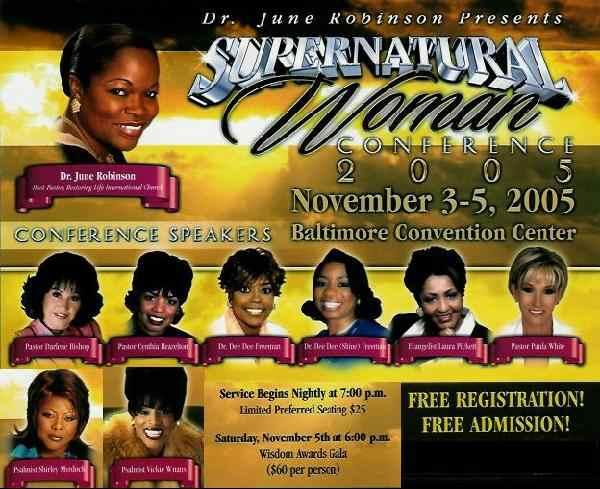
October 15, 2005
If You See My Husband, Please Send Him Home: Christian Families Can Survive Adultry

My cousin, Karen Butler, has written an awesome Christian book that single, married women and men should read. All of us have heard the gossip about someone's husband or wife tipping or some of us might even have been the center of that gossip. Thank God for Deliverance! Karen writes a candidly honest story about a Christian woman who struggles to deal with her husband's unfaithfulness. Yet, she takes the story a bit further challenging women all over to be our sisters' keepers!
BUY THE BOOK at http://www.authorhouse.com/BookStore/ItemDetail~bookid~33103.aspx
Read it and share your comments with us!
October 12, 2005
Happy Birthday to ME!
I turned 3_ on yesterday! I can't believe it. This year was probably one of the best and blessed birthdays for me ever. Probably because I have finally come into my own as one of God's daughters. It has been a long and sometimes lonely journey, but God. Hallelujah! God has brought me through! He has opened my eyes, and I see everyday as a new opportunity to grow closer to him. I see everyday as a new opportunity to shine forth His light. I am so thankful for God's mercy and blessings in my life. I am so thankful that God has taught me how to truly live and celebrate life!
October 2, 2005
GMA's Project Restore Launches "Music to Restore Hope"

GMA’s Project Restore Launches “Music to Restore Hope”
September 30, 2005
Campaign will Provide New Gospel Music CDs and CD Players to Hurricane Victims
Nashville, Tenn. – Project Restore (www.projectrestore.org), the gospel music industry’s official crisis response vehicle, has launched a campaign to deliver what the gospel music industry does best – Music to Restore Hope. The Music to Restore Hope campaign will engage the gospel music industry in the collection of gospel music CDs and portable CD players to be distributed to victims of Hurricane Katrina.
“Many organizations are helping in the Gulf Coast region to recover from the hurricanes by providing the basic needs such as water, food and clothing. When we considered what we could do as a community, we determined that the gospel music industry is in a unique position to bring restoration to the victims of the hurricanes by giving them music that will inspire their hearts and souls. We hope the message of hope and redemption in gospel music will encourage our fellow citizens on the Gulf as they begin to rebuild their lives,” said John W. Styll, president of Gospel Music Association (GMA).
Project Restore has partnered with PRC Compassion (www.prccompassion.org), a charitable coalition of churches and pastors trying to coordinate national, state, and local faith and community-based organizations to meet all needs of people impacted by Hurricane Katrina. They will act as the distributor of the CDs and portable CD players, first to the Gulfport, Mississippi area in October. A second distribution is planned for the New Orleans area.
“We are grateful that GMA and Project Restore have created the Music to Restore Hope campaign. I have seen the people of this community looking for something to hold on to during this time. They are looking for a hope that is found only in Jesus. I can promise that the gifts of music and CD players provided by the gospel music community will help to give that hope to the people here,” said Aaron Gates, organizer of Operations.
GMA’s Project Restore will reach out to both the gospel music record companies and the individual members of the GMA to participate in the Music to Restore Hope campaign. While the gospel music distributors and record labels are in the best position to provide quantities of new CDs, GMA members will be an integral part of the campaign by donating new portable CD players and batteries that will make it possible for the recipients to play their new CDs.
“We have heard from so many of our members who want to be a personal part of the gospel music community response to Katrina,” said Styll. “That’s why we are asking them to donate the CD players and batteries, because without the players, the music will have no life for the people of the Gulf Coast.”
Donations of new CDs, new portable CD players with batteries will be accepted at the GMA office between 10 a.m. and 4 p.m. CT. Complete details about making a contribution can be found on the Project Restore website – www.projectrestore.org. The first delivery of CDs and CD players to Gulfport will be on the weekend of October 14. Donations for the Gulfport delivery will be accepted through October 11, but that will not be the end of the campaign. Donations will be accepted through the month of October.
PRC Compassion has been one of the key ministries working in the Gulf Coast. It was created by the Pastor’s Resource Council, a coalition of Louisiana churches and pastors formed several years ago to specific address community needs. The council established PRC Compassion to coordinate long-term relief efforts in the Gulf Coast and is supported by pastors, churches and ministries nationwide. Some of PRC Compassion’s accomplishments in the aftermath of Hurricane Katrina include:
82 church-run shelters or PRC serviced shelters,
400 semi trucks to 18 relief distribution points through out coastal LA,
600 out of state volunteers have been housed, fed, and deployed,
1500 doctor/client encounters have been facilitated by PRC Compassion resident physician,
2500 in-state volunteers have loaned their energies to assist our neighbors in need; and
10,512 displaced citizens have been housed, fed and received ministry.
The Music to Restore Hope campaign is not the gospel music industry’s first involvement with PRC Compassion. Earlier this month, the Dove Award-winning newsboys constructed 20 tents for the temporary housing of PRC Compassion relief workers in Gulfport.
Project Restore’s other Katrina-related effort was “Gospel Angels” benefit concert, held last week in Atlanta. “Gospel Angels: A Concert to Restore Hope," has raised more than $122,000 in donations during the two-hour broadcast on Sept. 22 in the Eastern and Central time zones, with additional donations still being counted, according to the Gospel Music Channel. Broadcast on the Gospel Music Channel, Paxson Communications Corporation’s i (formerly PAX TV), the Worship Network as well as on XM Radio, the concert drew a 0.6 rating, meaning approximately 600,000 households tuned in. All proceeds from the concert will be divided between World Vision and Feed the Children, to assist each organization in their respective hurricane relief efforts.
Additionally, Project Restore has been chronicling the individual artists and music industry contributions to hurricane relief on the Project Restore website.
Founded in 1964, the 4,500-member Gospel Music Association is dedicated to exposing, promoting and celebrating the gospel through music. The GMA represents all styles of gospel music including contemporary pop, rock, urban gospel, praise & worship, Southern gospel, country and children’s gospel music. For more information, visit www.gospelmusic.org.
Subscribe to:
Posts (Atom)


